
What Is One Pack PVC Stabilizer and Why Is It Used?
Read:10
Source:
Abstract
A one pack PVC stabilizer is not a single stabilizer chemical. It is a pre-balanced PVC additive package designed to combine heat stabilization, lubrication and processing support into one ready-to-use system. For PVC manufacturers, the real value is not only easier dosing. A well-designed one-pack system can reduce formulation trial errors, improve batch-to-batch consistency, simplify additive management and help production lines run more predictably.
This guide explains what one pack stabilizer means, how it differs from traditional separate-additive dosing, which PVC products can use it, and how manufacturers should evaluate a one-pack solution before production.
What Is One Pack PVC Stabilizer?
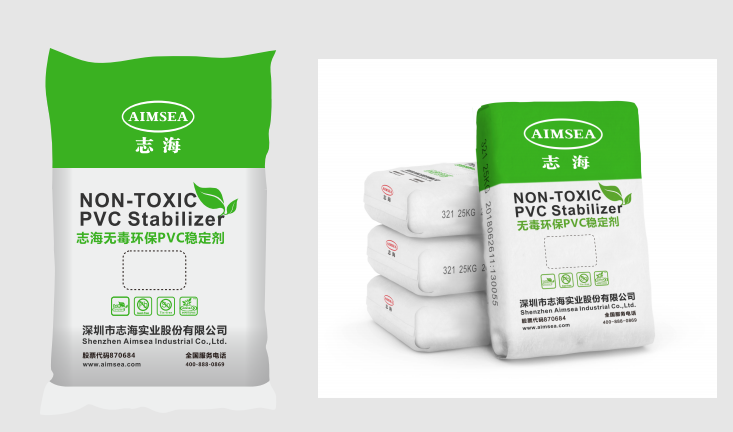
A one pack PVC stabilizer is an integrated additive system used in PVC processing. Instead of adding heat stabilizer, internal lubricant, external lubricant and processing-support additives separately, manufacturers use one pre-balanced package designed for a specific PVC product and process.
The word “one pack” can be misleading. It does not mean one chemical does everything. It means several additive functions are designed, mixed and supplied as one controlled system.
For PVC manufacturers, this is important because PVC processing is sensitive. Small changes in stabilizer dosage, lubricant ratio, filler level, processing temperature or residence time can affect color, torque, fusion, surface gloss, plate-out and final product strength. A one-pack system reduces the number of variables the factory has to control during daily production.
Quick Answer
A one pack stabilizer is a ready-to-use PVC additive package that combines stabilizing, lubricating and processing functions. It is used to simplify dosing, reduce formulation mistakes and improve production consistency.
Why One Pack Stabilizer Is Not Just a Single Additive?
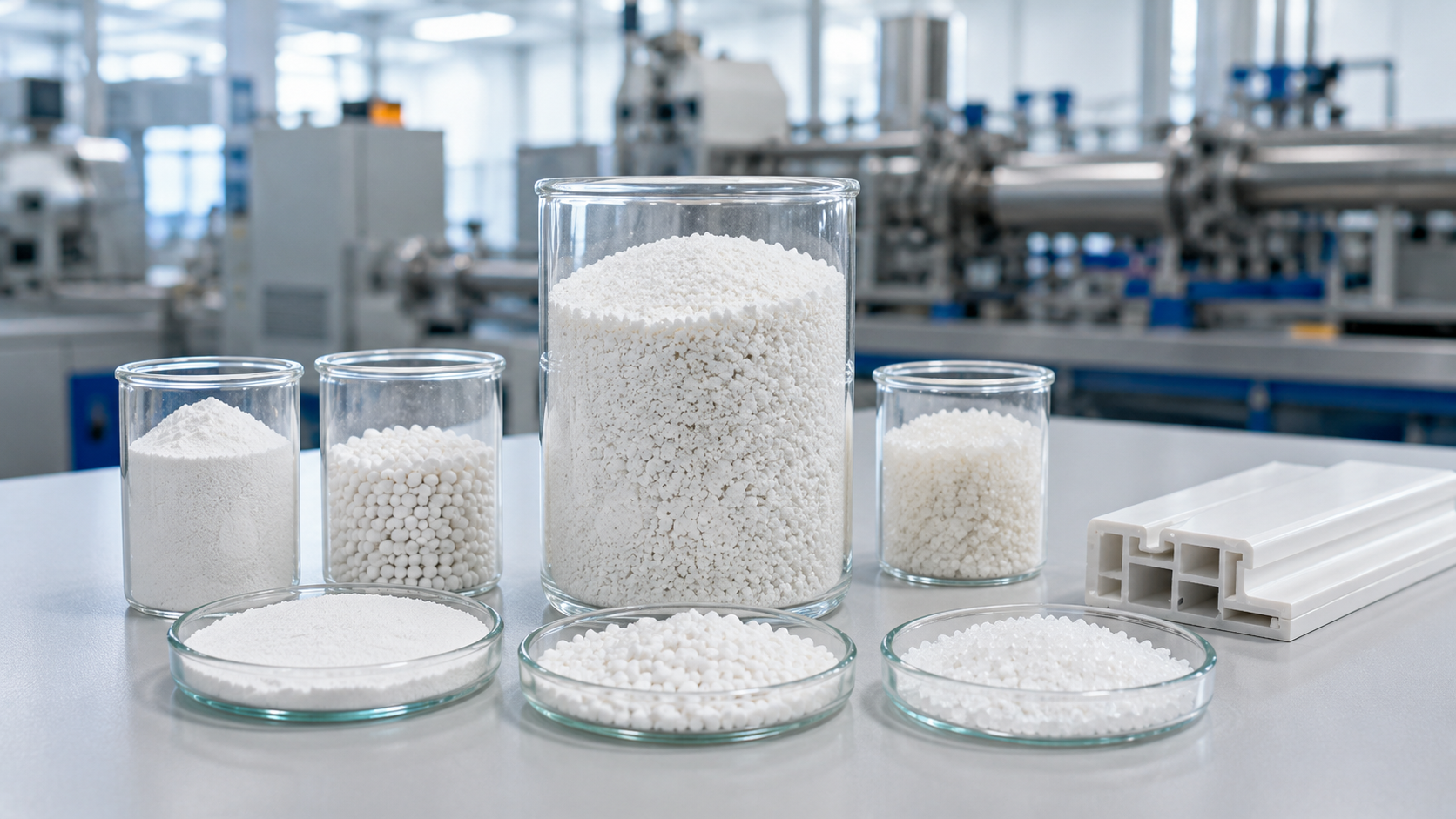
A one pack stabilizer should be understood as a formulation solution, not just a product name. In PVC manufacturing, stability and processability are connected. A heat stabilizer may protect PVC from degradation, but the line can still fail if lubrication is poor. A lubricant may improve metal release, but too much external lubrication can delay fusion. A processing aid may improve melt strength, but it must match the stabilizer and resin system.
That is why one-pack design usually considers three major functions:
Function Group | Role in PVC Processing | Production Value |
Heat stabilizer system | Protects PVC from heat degradation and color change | Improves thermal stability, whiteness or clarity |
Internal lubricant | Helps resin particles fuse and supports melt flow | Controls torque, fusion and processing smoothness |
External lubricant | Reduces friction between PVC melt and metal surfaces | Supports mold release, die cleanliness and surface finish |
Processing support additives | Adjusts melt strength, dispersion or production behavior | Helps reduce defects and improve consistency |
Optional functional additives | May include application-specific support | Odor control, transparency, weatherability or compatibility |
AIMSEA describes its Polymer Additives as an all-in-one formulation solution that combines stabilizing, lubricating and processing functions to simplify PVC production and support consistent product quality.
One Pack Stabilizer Uses in PVC Manufacturing
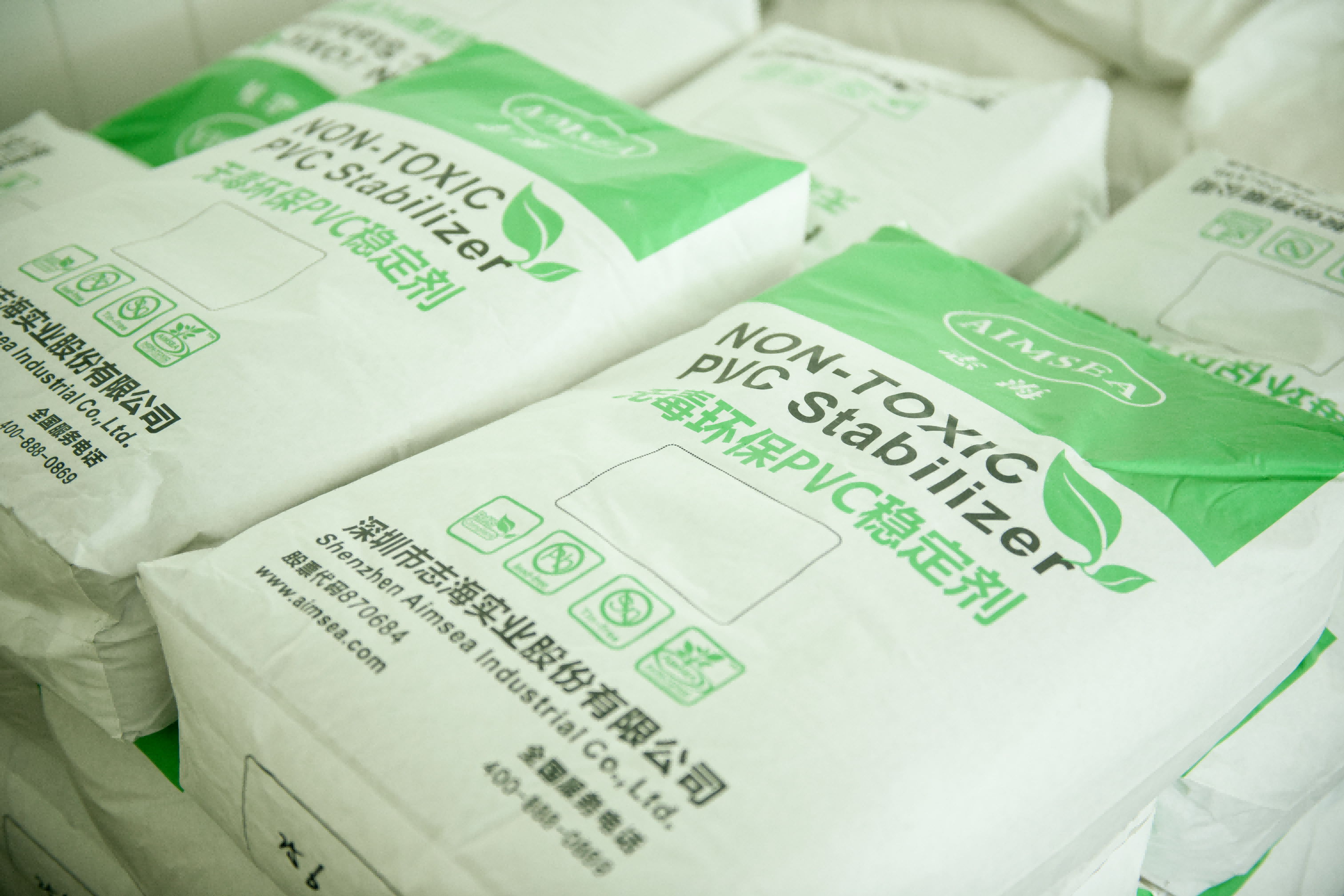
The main one pack stabilizer uses are production simplification, dosage accuracy, process stability and lower trial cost. It is especially useful when factories want to move from operator-dependent compounding to a more controlled additive system.
Common application areas include:
PVC pipes and fittings
PVC profiles
PVC foam boards
SPC, LVT and vinyl flooring
Wire and cable compounds
Calendered PVC film
Decorative wall panels
Flexible PVC products
Transparent PVC products when a special clear-grade package is designed
Recycled PVC compounds with odor or compatibility challenges
AIMSEA’s PVC stabilizer page positions its solutions around calcium-zinc stabilizers and customized additive packages for pipes, fittings, profiles, flooring, cables, transparent products and recycled PVC applications.
Why Manufacturers Use One-Pack Systems?
PVC factories usually choose one-pack systems for practical production reasons:
Manufacturer Concern | How One Pack Helps |
Too many additives to weigh | Reduces separate weighing steps |
Operator errors | Improves dosing accuracy |
Batch-to-batch variation | Improves formula repeatability |
Plate-out or poor surface | Helps balance stabilizer and lubrication |
Trial adjustment takes too long | Provides a ready starting point |
Production line is unstable | Reduces uncontrolled formulation variables |
Purchasing is complicated | Simplifies additive inventory |
New product development is slow | Shortens formulation screening |
For many manufacturers, the benefit is not only chemical performance. It is the ability to make production easier to control.
One Pack PVC Stabilizer vs Separate Additive Dosing
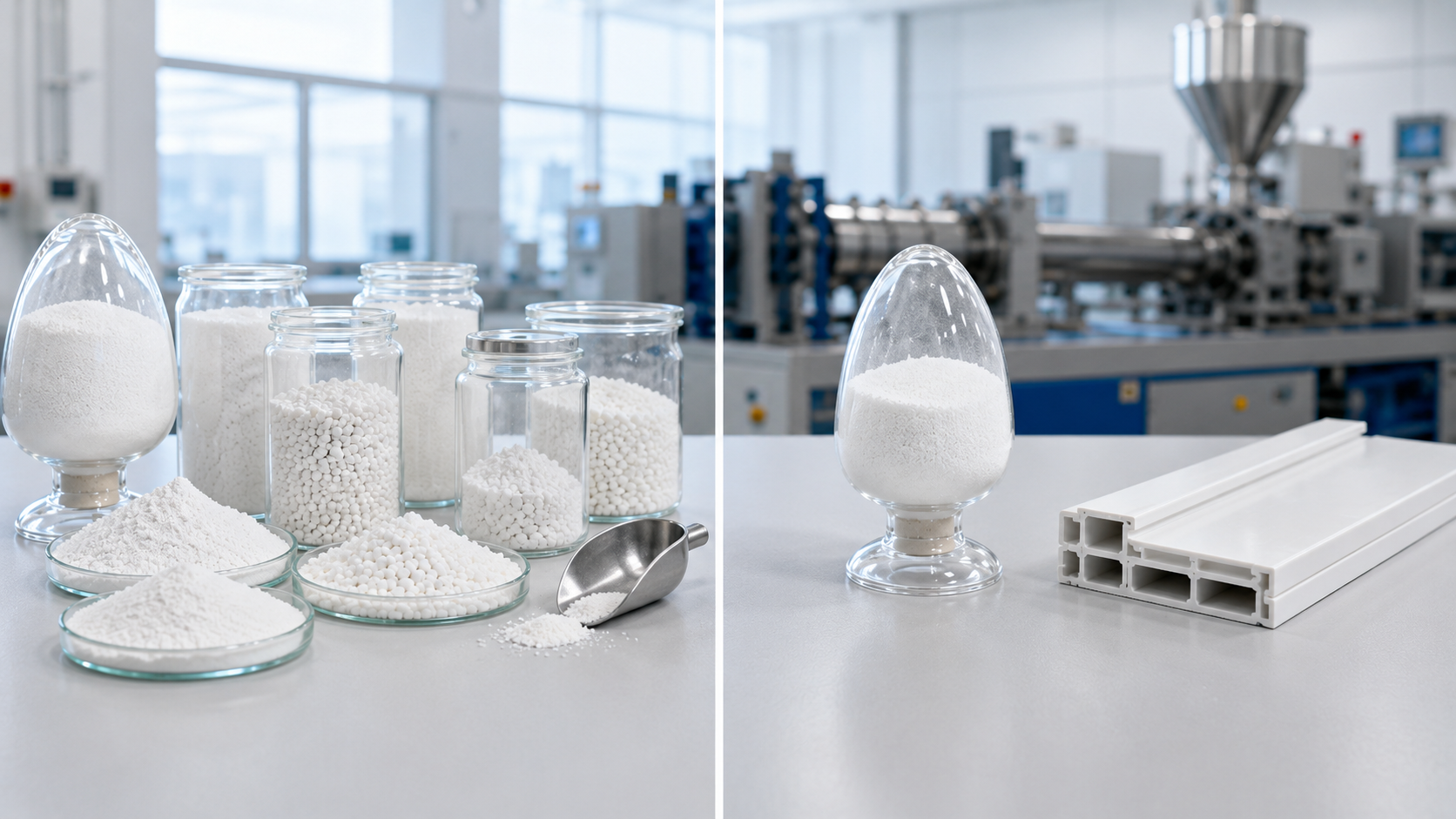
A traditional PVC formulation may add stabilizer, lubricant, processing aid, wax, stearate and other additives separately. This gives the factory flexibility, but it also creates more room for error.
A pvc one pack stabilizer reduces this complexity by pre-balancing the key additive components.
Comparison Point | Separate Additive Dosing | One Pack System |
Formula control | Factory controls every additive separately | Supplier pre-balances key additive package |
Flexibility | High, but requires technical experience | More controlled, easier for production teams |
Dosing risk | Higher risk of weighing errors | Lower risk with fewer dosing steps |
Batch consistency | Depends strongly on operator control | Easier to repeat across batches |
Troubleshooting | Many possible causes to check | Fewer variables in daily production |
Inventory | More individual materials | Fewer additive SKUs |
Best for | Experienced formulation teams | Factories seeking stable, simplified production |
SpecialChem also notes that lubricant “one-packs” are designed for specific processing and product applications, and that stabilizer selection must consider lubricity requirements, especially in rigid PVC processing.
This point is important: one pack is not about removing formulation science. It is about transferring more of the formulation balance into a controlled additive package.
How One Pack Systems Reduce Trial-and-Error Cost?
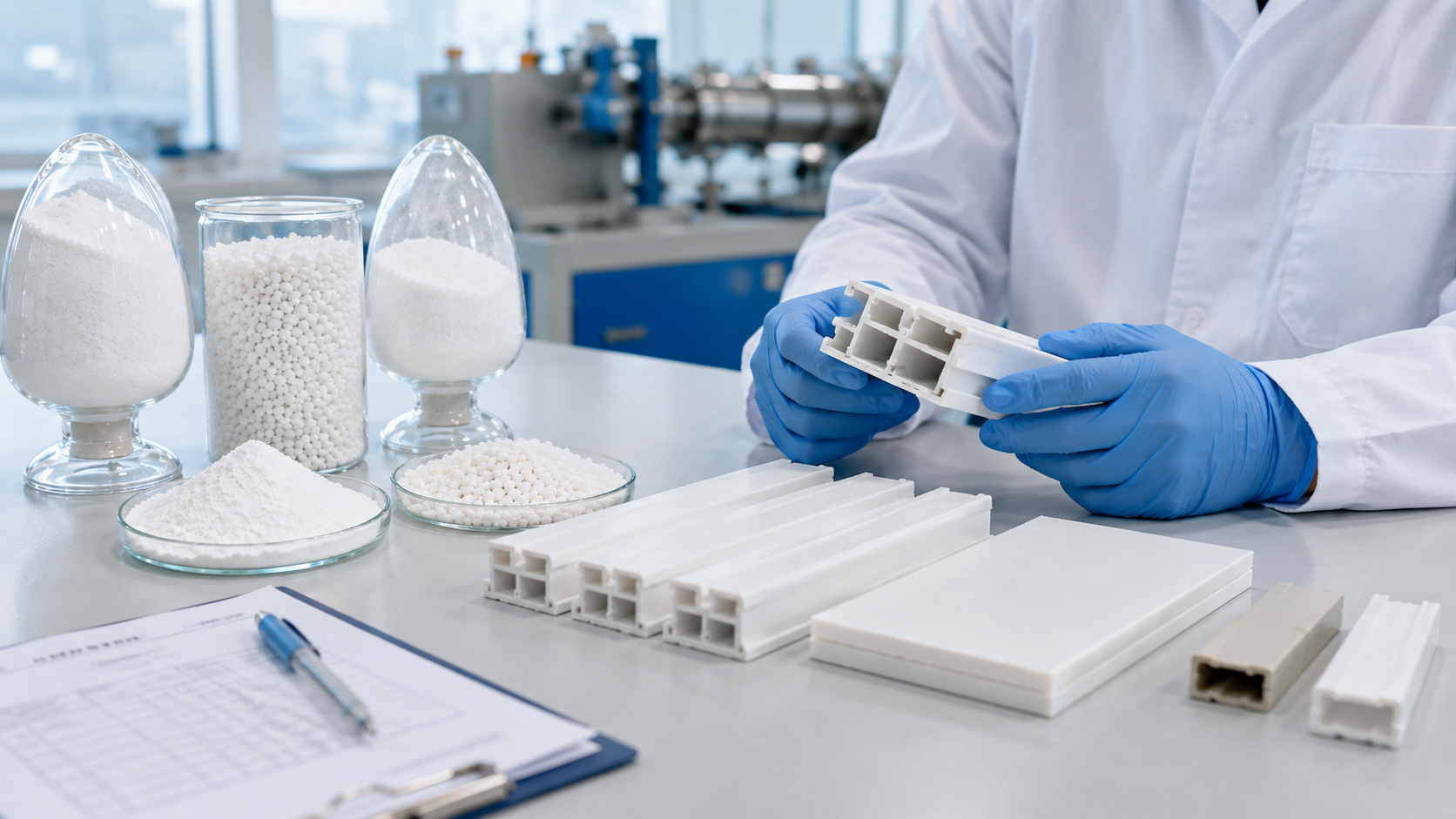
A major reason manufacturers use one-pack systems is to reduce hidden production cost. Many buyers compare only price per kilogram, but in PVC compounding, the real cost often comes from trial failure, unstable output and quality defects.
A lower-priced additive package may become expensive if it causes:
More yellowing
Poor fusion
Higher scrap rate
Plate-out and line cleaning
Lower output speed
Customer complaints
Repeated sample trials
More technician time
Unstable product quality after scale-up
A well-designed one pack PVC stabilizer can reduce trial-and-error cost because the supplier has already considered the relationship between stabilizer, lubricant, processing support and application requirements.
Real Cost Comparison Logic
Cost Area | What Happens with Poor Additive Balance | What a Good One Pack System Should Improve |
Material cost | More dosage needed to compensate | Optimized dosage for target performance |
Labor cost | More weighing and adjustment | Fewer dosing steps |
Trial cost | Repeated formula changes | Faster screening and validation |
Downtime cost | More cleaning and stoppage | Cleaner continuous processing |
Quality cost | More rejects and customer complaints | More stable product quality |
Technical cost | More troubleshooting time | Easier problem isolation |
For production managers, the best one-pack system is not necessarily the cheapest quotation. It is the system that reduces total instability.
One Pack Stabilizer Formula Logic by PVC Application
The best one pack stabilizer formula starts from the final PVC product. A pipe formula is not the same as a cable formula. A transparent sheet formula is not the same as a foam board formula. Each application has different priorities.
PVC Product | Main Formula Target | One Pack Design Focus |
PVC pipes | Thermal stability, smooth extrusion, pressure performance | Fusion control, lubrication balance, low plate-out |
PVC fittings | Heat stability, mold release, surface quality | Mold release, flow behavior, impact support |
PVC profiles | Initial whiteness, weatherability, weld strength | Color hold, external lubrication, clean extrusion |
PVC wire and cable | Heat aging, electrical insulation, flexibility | Thermal aging, low moisture absorption, flexibility balance |
SPC / LVT flooring | Color stability, dimensional control, low odor | Heat stability, filler compatibility, odor control |
PVC foam board | Cell structure, density, surface smoothness | Fusion timing, melt strength, lubricant balance |
Transparent PVC | Clarity, low haze, yellowing control | High transparency, low volatility, dispersion control |
Recycled PVC | Odor, color variation, compatibility | Stabilization plus deodorizing or compatibility support |
This is why manufacturers should avoid asking suppliers only for “one pack stabilizer price.” A better request is: “We produce PVC pipe / profile / cable / transparent sheet under these processing conditions. Please recommend a one-pack system and trial method.”
One Pack for Transparent PVC Requires Extra Care
Transparent PVC requires stricter additive design than opaque products. Stabilizer, lubricant and processing additives must not reduce clarity or increase haze. AIMSEA highlights ultra-clear Ca-Zn stabilizer solutions for clear PVC sheet, rigid sheet, shrink film, transparent film, white film, hose and packaging, with focus on clarity, low haze, yellowing control, low odor and stable processing.
For this reason, a one-pack system for transparent PVC should be validated by haze, light transmission, yellowness index, static aging, dynamic processing and plate-out observation.
Calcium Zinc One Pack Stabilizer for Lead-Free Production
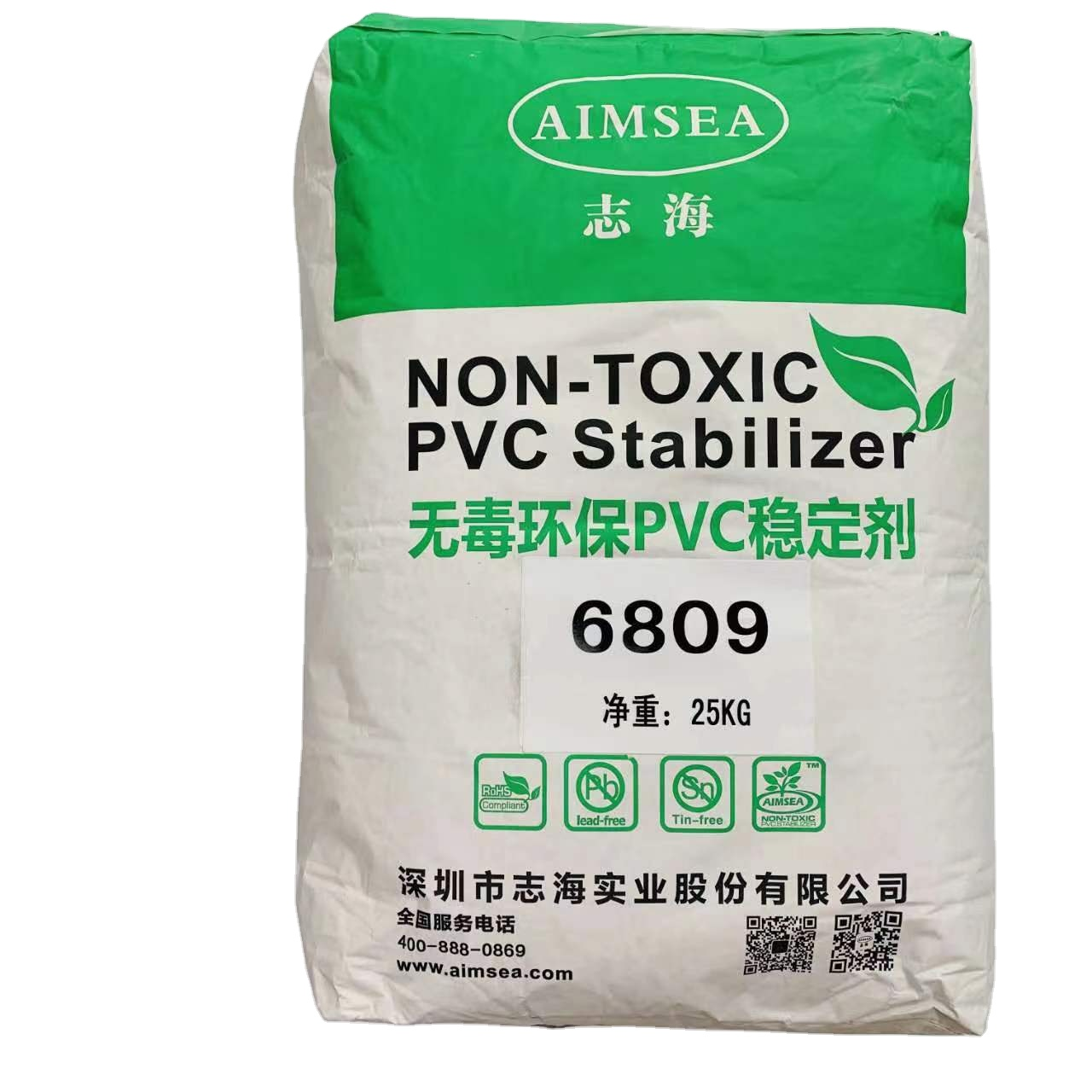
(圖片alt:Calcium Zinc One Pack Stabilizer for Lead-Free Production )
A calcium zinc one pack stabilizer is often used when manufacturers want both simplified processing and lead-free formulation direction. This is especially relevant for export-oriented PVC manufacturers.
The EU restriction on lead in PVC articles under REACH sets a concentration limit of 0.1% by weight of the PVC material, effective November 29, 2024, with certain derogations.
This does not mean every manufacturer must use the same calcium-zinc system. A lead-free one-pack package still needs to match the application. Pipe extrusion, cable compounding, calendered flooring and transparent PVC all need different stabilizer-lubricant balance.
Why Ca-Zn One Pack Is Popular?
Manufacturers choose Ca-Zn one-pack systems because they can support:
Lead-free formulation direction
Lower heavy-metal concern
Better compliance positioning
Low-odor production targets
Simplified additive management
Cleaner production trials
More consistent batch control
However, Ca-Zn one-pack systems should be tested carefully. Poorly designed packages may still cause delayed fusion, zinc burning, plate-out or unstable color. Supplier experience matters.
How to Evaluate a PVC One Pack Stabilizer Supplier?
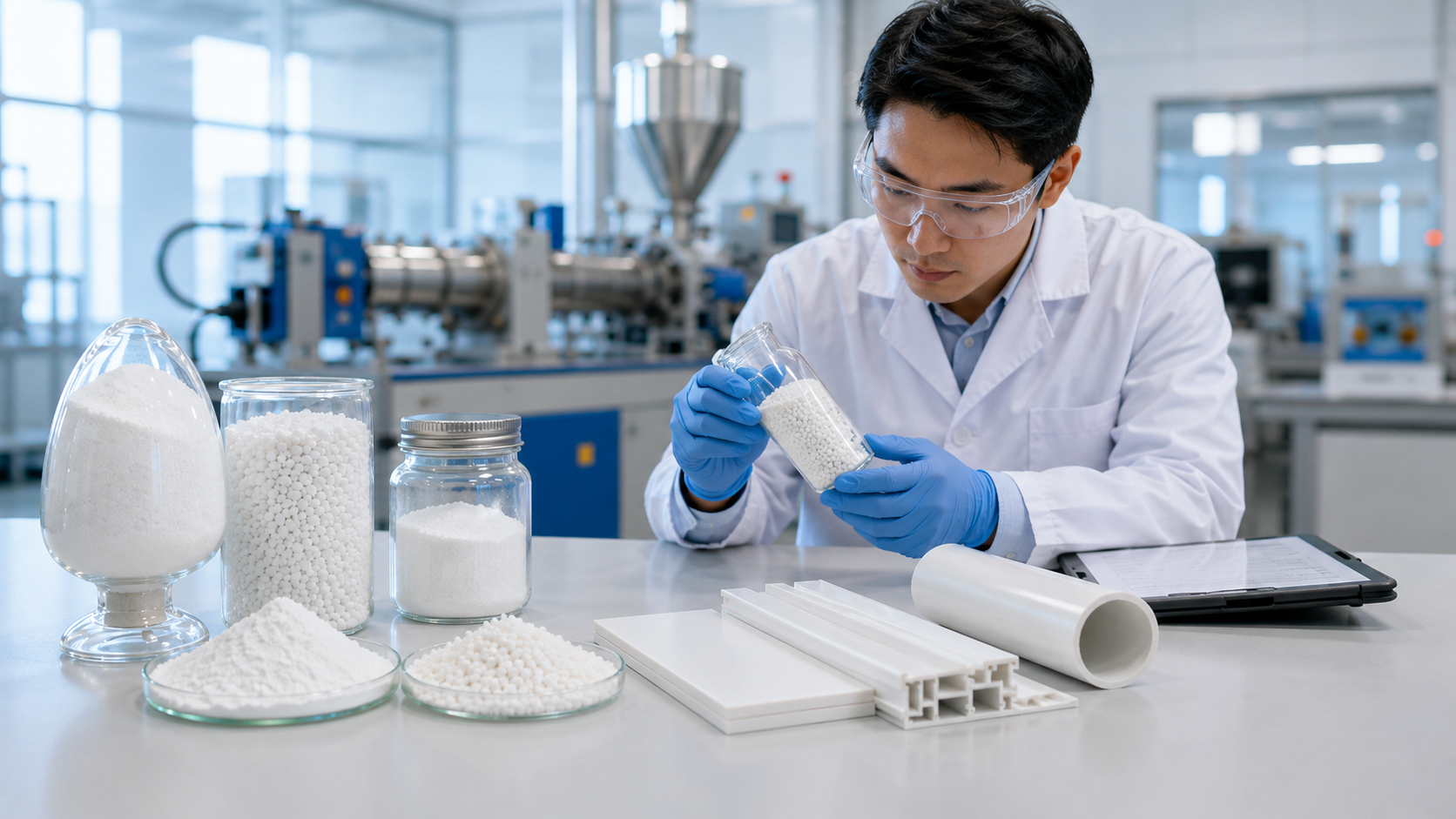
Choosing a supplier is not only about price. A one-pack system depends heavily on formula design, production uniformity and technical support.
Supplier Evaluation Checklist
Evaluation Point | Why It Matters |
Application experience | The supplier must understand your product and machine |
Custom formulation ability | One formula cannot fit all PVC products |
Heat stability testing | Confirms basic stabilizing performance |
Torque or fusion testing | Shows processing behavior before production |
Plate-out observation | Important for long continuous runs |
Optical testing | Required for transparent PVC |
Batch consistency control | Prevents variation between deliveries |
Compliance document support | Helps export and buyer approval |
Sample trial support | Reduces trial-and-error risk |
AIMSEA states that it provides rapid custom formulations from in-house R&D and 50+ advanced testing facilities, which supports its positioning as a technical partner rather than only an additive supplier.
What Makes This Article Different from Basic One-Pack Content?
Many one-pack articles stop at the definition: “It combines stabilizer, lubricant and additives.” That is correct, but not enough for manufacturers.
A more useful approach is to evaluate one-pack systems by three production questions:
1. Does it reduce the number of uncontrolled formulation variables?
2. Does it improve long-run line stability, not just short lab performance?
3. Does it reduce the total cost of trial, downtime, scrap and quality variation?
This is the real reason one-pack stabilizers are used.
Sample Request Checklist for One Pack PVC Stabilizer
To get a useful sample, manufacturers should provide enough technical information. A vague request usually leads to a general-grade recommendation, which may not solve the production problem.
Information to Send Before Sample Recommendation
PVC product type
Rigid or flexible formulation
Resin grade and K value
Filler type and dosage
Plasticizer type and dosage if used
Current stabilizer and lubricant system
Current dosage level
Processing method
Processing temperature range
Output speed
Main production problem
Target improvement
Final market or compliance requirement
Required document support
Existing trial data if available
Tests to Run After Receiving Sample
Test Item | What It Shows |
Static heat stability | Basic heat resistance and color hold |
Dynamic processing test | Performance under heat and shear |
Torque rheometer test | Fusion behavior and lubrication balance |
Plate-out observation | Long-run cleanliness |
Color comparison | Initial color and batch consistency |
Haze / light transmission | Required for transparent PVC |
Odor evaluation | Important for indoor, flooring and daily-use products |
Production trial | Confirms real machine performance |
A qualified one-pack system should not only pass a lab test. It should perform consistently in the customer’s actual machine, formula and production rhythm.
FAQs About One Pack Stabilizers
What is one pack PVC stabilizer?
It is a pre-balanced PVC additive package that combines stabilizing, lubricating and processing-support functions. It helps simplify dosing, reduce formulation errors and improve production consistency.
Is one pack stabilizer the same as calcium-zinc stabilizer?
Not exactly. Calcium-zinc describes the stabilizer chemistry. One pack describes the package form and formulation logic. A one-pack system may use calcium-zinc chemistry, but it also includes lubricants and processing-support components.
What are the main one pack stabilizer uses?
Common uses include PVC pipes, fittings, profiles, cable compounds, flooring, foam boards, calendered film, transparent PVC and recycled PVC. The exact formula should be designed according to application and processing conditions.
Can one pack stabilizer reduce production cost?
Yes, but not only through lower unit price. It can reduce real production cost by lowering weighing errors, scrap, downtime, plate-out, repeated trials and batch variation.
Is one pack stabilizer suitable for transparent PVC?
Yes, but only when it is designed for transparent PVC. Clear products require high clarity, low haze, yellowing control, low odor and good dispersion. A general one-pack system may not be suitable.
How should manufacturers choose one pack stabilizer?
Manufacturers should choose by product type, processing method, heat stability target, lubrication needs, surface requirement, compliance requirement and trial results. Sample testing is essential before bulk use.
Conclusion
A one pack PVC stabilizer is not just a convenient additive blend. It is a formulation strategy for manufacturers who want more stable production, fewer weighing errors and less trial uncertainty.
Its value comes from balance. Heat stabilization protects PVC from degradation. Internal lubrication supports fusion and melt flow. External lubrication improves metal release and surface quality. Processing-support additives help control melt behavior and production consistency. When these functions are designed together, a one-pack system can help factories reduce hidden costs caused by trial failure, downtime, plate-out and quality variation.
For PVC manufacturers, the best next step is not to ask for a universal formula. It is to share the product, process, current problem and target performance with a technical supplier, then validate the one-pack system through structured testing and real production trials.
References
1. AIMSEA PVC Stabilizer page: Polymer Additives combine stabilizing, lubricating and processing functions, and AIMSEA provides customized additive packages for pipes, fittings, profiles, flooring, cables, transparent products and recycled PVC.
2. SpecialChem PVC heat stabilizer guide: lubricant one-packs are designed for specific processing and product applications, and stabilizer selection should consider lubricity requirements in rigid PVC.
3. TüV Rheinland summary of EU REACH lead restriction in PVC: lead concentration above 0.1% by weight of PVC material is restricted from November 29, 2024, with derogations.
4. AIMSEA homepage: AIMSEA highlights one pack PVC stabilizer, ultra-clear Ca-Zn stabilizer, plastic deodorant, 20+ countries served, in-house R&D and 50+ advanced testing facilities.
Table of Contents
Copyright © Shenzhen Zhihai Industrial Co., LTD.
Digital Marketing : CTMON


×
CONTACT US
We use cookies to allow our website to function properly, personalize content and advertising, provide social media functionality, and analyze traffic. We also share information about your use of our website with social media, advertising, and analytics partners.
Agree
Reject

loading...