
Why PVC Turns Yellow During Processing and How Stabilizers Help?
Read:37
Source:
Abstract
PVC turns yellow during processing mainly because heat and shear can trigger thermal degradation. When PVC is overheated or poorly stabilized, hydrogen chloride can be released, conjugated structures can form, and the material may gradually change from clear or white to yellow, brown or even black. For PVC manufacturers, yellowing is not only a color issue. It can signal a narrow processing window, unstable formulation, poor lubricant balance or insufficient stabilizer performance.
This guide explains why PVC yellowing happens, how pvc thermal stability affects production quality, and how Ca-Zn stabilizers and transparent PVC testing can help manufacturers control color, clarity and line stability.
Why Does PVC Turn Yellow During Processing?
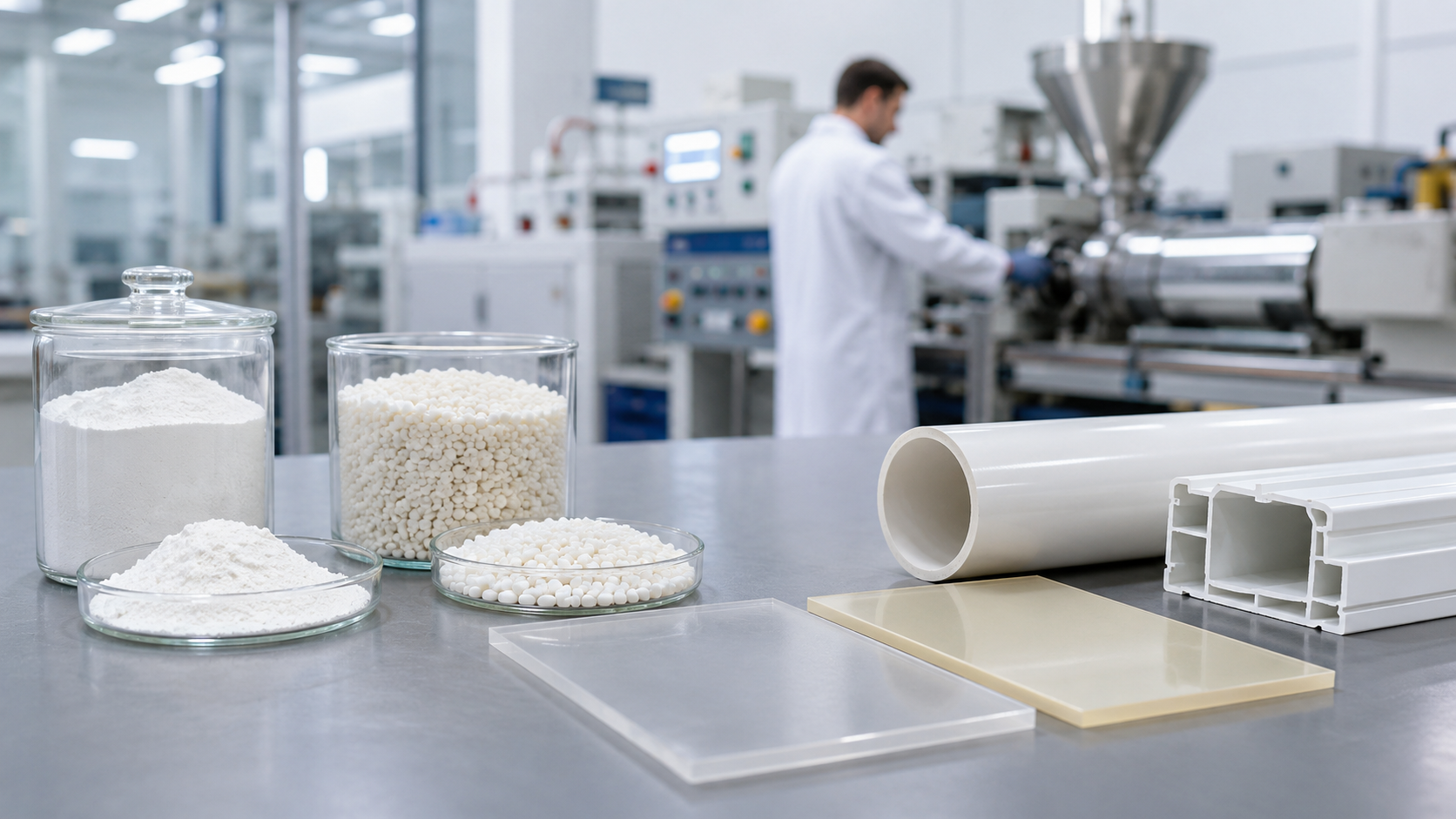
PVC turns yellow when its molecular structure begins to change under heat, shear or long residence time. In simple terms, the material is not only being melted and shaped. It is also being stressed.
During extrusion, calendering, injection molding or compounding, PVC may release hydrogen chloride. As degradation continues, conjugated double bonds can form in the polymer chain. These structures absorb light differently, so the product begins to show visible color change. Academic research explains that PVC degradation can release HCl and form polyene sequences, causing the material to turn yellow, orange, red, brown and eventually almost black.
For PVC manufacturers, this is why yellowing should not be treated as a simple appearance problem. It is often a signal that the processing system is not stable enough.
Quick Answer
PVC turns yellow during processing because heat, shear and long residence time can trigger PVC degradation. This releases HCl, forms conjugated structures and reduces color stability. A suitable stabilizer helps improve pvc thermal stability, delay discoloration and widen the processing window.
PVC Thermal Stability and HCl Release
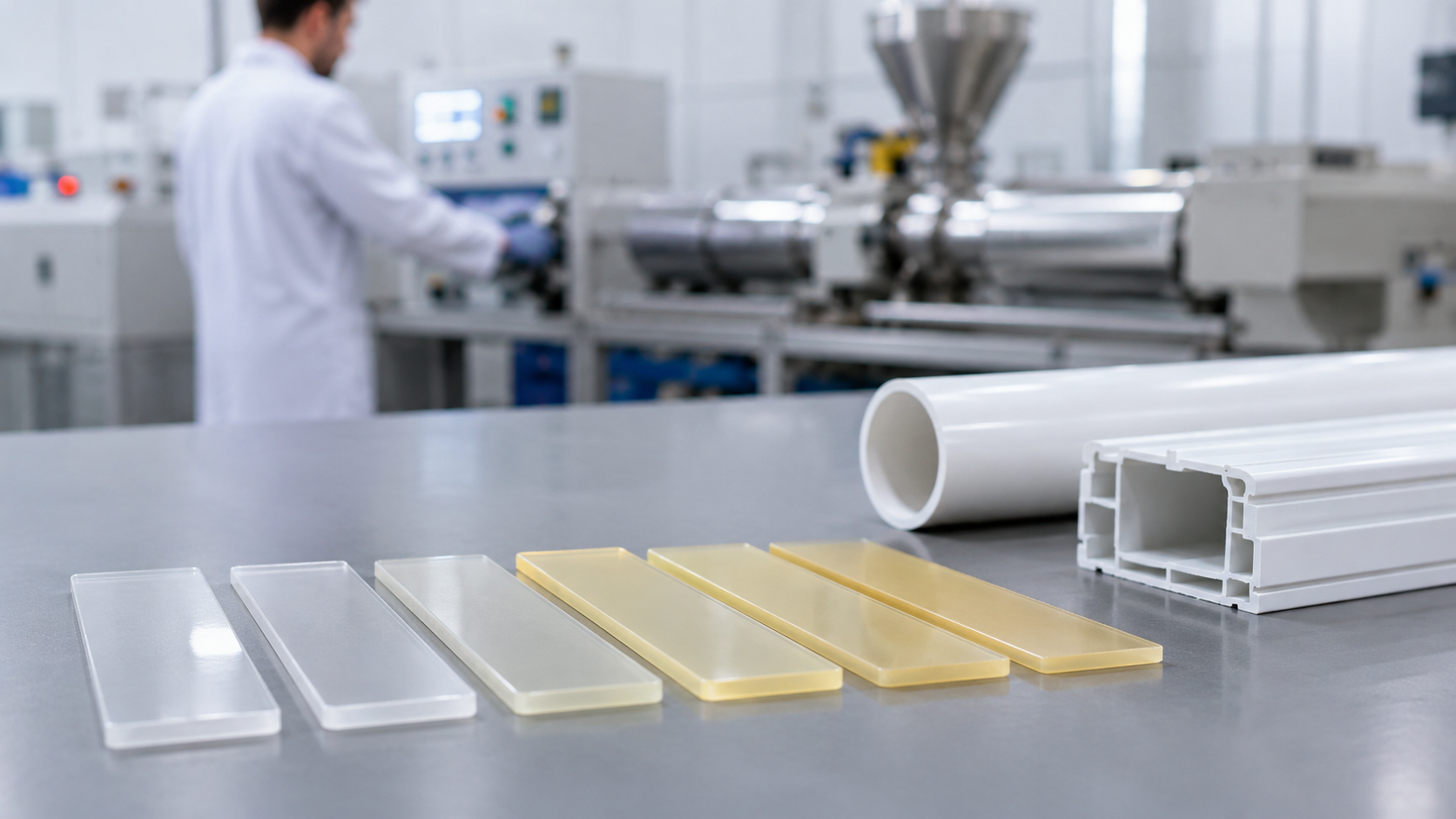
PVC thermal stability refers to how well PVC resists degradation under heat. A formulation with good thermal stability can maintain color, surface quality and mechanical performance for a longer time during processing.
When thermal stability is weak, the production line becomes sensitive. A small increase in barrel temperature, roller temperature, screw speed or residence time may cause obvious color change. This is especially common in transparent PVC, white PVC and light-colored rigid products.
The degradation process is also autocatalytic. Once HCl is released, it can further accelerate PVC degradation. This means early yellowing can become worse quickly if the formulation or processing condition is not corrected.
How Yellowing Develops in Production?
Stage | What Happens Chemically | What the Factory Sees |
Early heat stress | Small amount of degradation begins | Slight cream or pale yellow tone |
HCl release increases | Dehydrochlorination accelerates | Yellowing becomes more visible |
Conjugated structures build up | More light absorption occurs | Orange, brown or darker color |
Severe degradation | Chain damage and burning risk increase | Black specks, burnt marks, brittle product |
AIMSEA’s internal transparent PVC testing material records a similar color-deepening process during heat aging: transparent sheet samples can change from light color to yellow, reddish brown and black as PVC degradation releases HCl and forms conjugated structures.
Common Factory Causes of PVC Yellowing
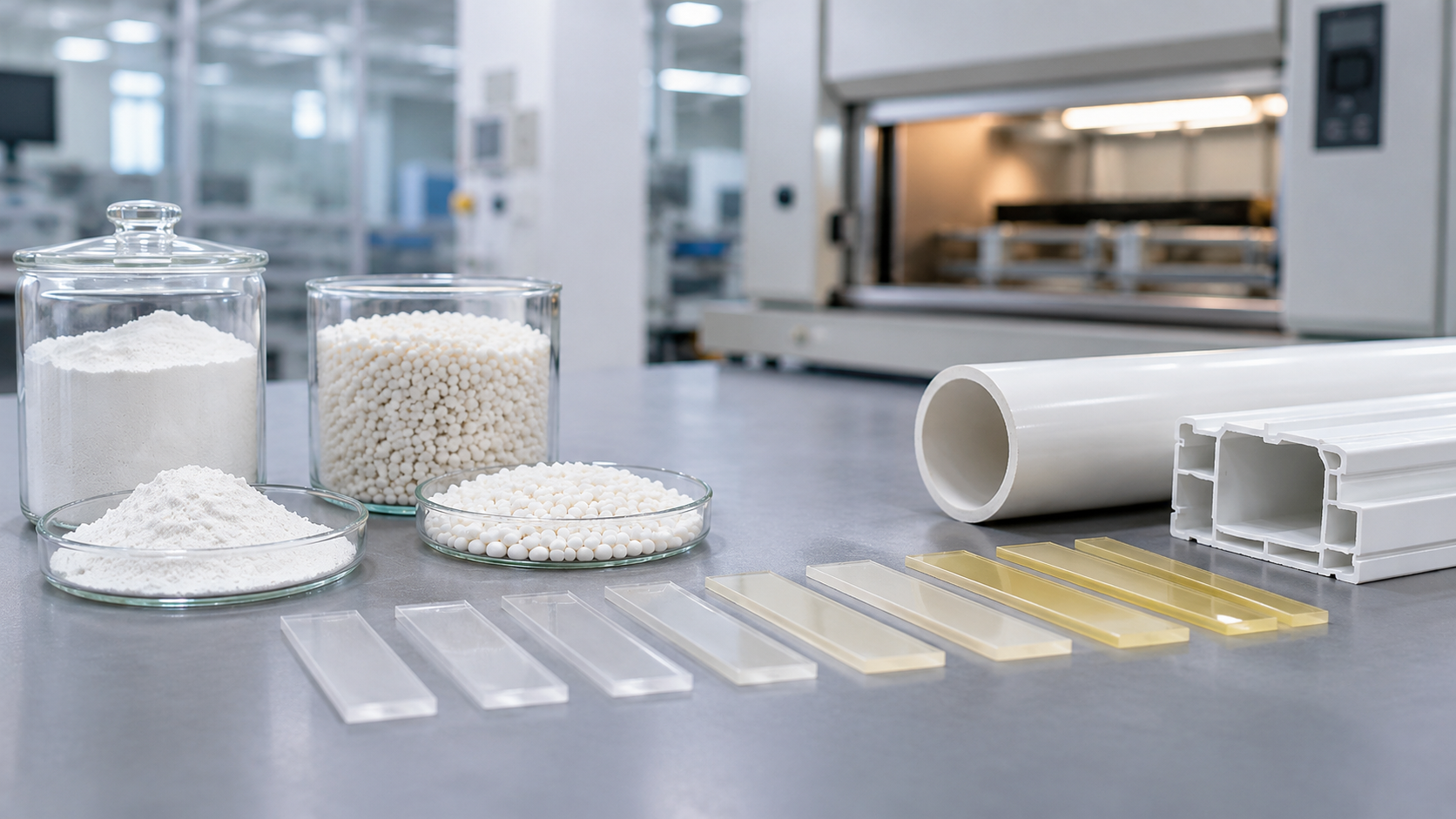
PVC yellowing is rarely caused by one factor only. In most factories, it is the combined result of heat history, formulation balance, stabilizer performance and machine control.
1. Processing Temperature Is Too High
High temperature is the most direct trigger. If the barrel, die, roller or mold temperature is higher than the formulation can tolerate, yellowing may appear even if the stabilizer dosage looks normal.
This often happens when operators increase temperature to improve flow, fusion or output speed. The line may run faster for a short time, but color stability becomes worse.
2. Residence Time Is Too Long
Even if the temperature is not extreme, PVC can still yellow when it stays in the hot zone too long. Long residence time may come from slow line speed, dead corners in the die, poor material flow or frequent production stops.
In transparent sheet, film and rigid sheet production, residence time control is especially important because small color changes are easy to see.
3. Stabilizer System Is Too Weak
A weak stabilizer system cannot capture or neutralize HCl effectively enough. Nature’s 2025 review on PVC degradation notes that many heat stabilizers include metallic soaps that react with HCl and help prevent further PVC degradation.
If the stabilizer is not suitable for the processing temperature, product type or formulation, yellowing may appear early.
4. Lubrication Is Not Balanced
Lubrication affects fusion, torque, shear heat, surface gloss and plate-out. Too little external lubrication may increase friction and shear heat. Too much lubrication may delay fusion or reduce compatibility. Both situations can create unstable color.
SpecialChem’s PVC stabilizer selection guidance also points out that stabilizer choice is closely connected with lubricant balance, especially in rigid PVC systems where different stabilizer types require different lubrication support.
5. Filler, Pigment or Recycled Material Is Inconsistent
Calcium carbonate, titanium dioxide, pigments, plasticizers and recycled PVC can all influence yellowing. Recycled materials may already contain degraded PVC, residual stabilizer, impurities or odor sources. Pigment quality and dispersion can also affect visible color.
This is why the same stabilizer may perform differently when raw material batches change.
How Stabilizers Help Improve PVC Color Stability?
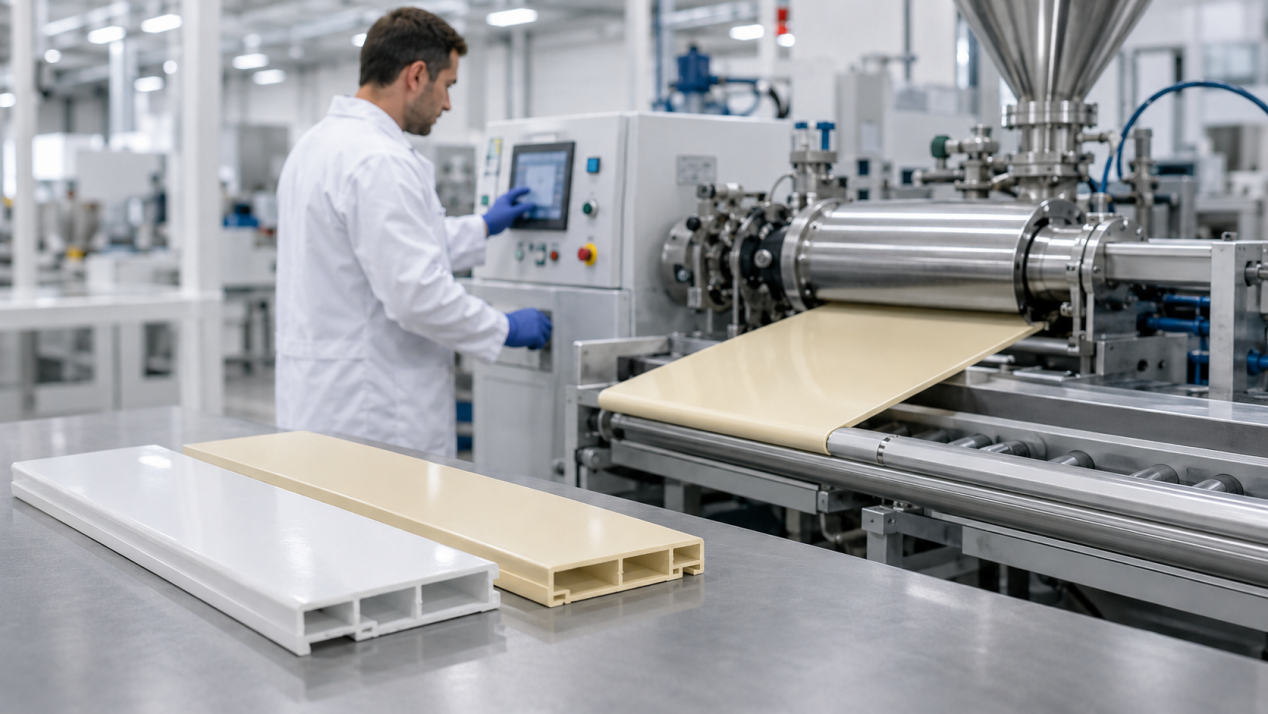
A stabilizer helps improve PVC color stability by slowing thermal degradation and supporting a more stable processing window. It does not simply “cover” yellowing. It works by controlling the chemical and processing conditions that lead to yellowing.
Main Ways Stabilizers Help
Stabilizer Function | Practical Value for Manufacturers |
HCl control | Reduces the acceleration of degradation |
Initial color protection | Helps maintain whiteness or clarity in early processing |
Long-term heat stability | Supports longer continuous production |
Lubrication support | Helps control fusion, torque and surface finish |
Compatibility improvement | Reduces plate-out, haze and color drift |
Process tolerance | Gives operators more room for normal temperature and speed changes |
A good stabilizer system should be judged by production performance, not only by laboratory heat stability time. If the color is good in a short test but changes after two hours of continuous running, the formulation still needs adjustment.
Ca-Zn Stabilizer for Lead-Free Yellowing Control
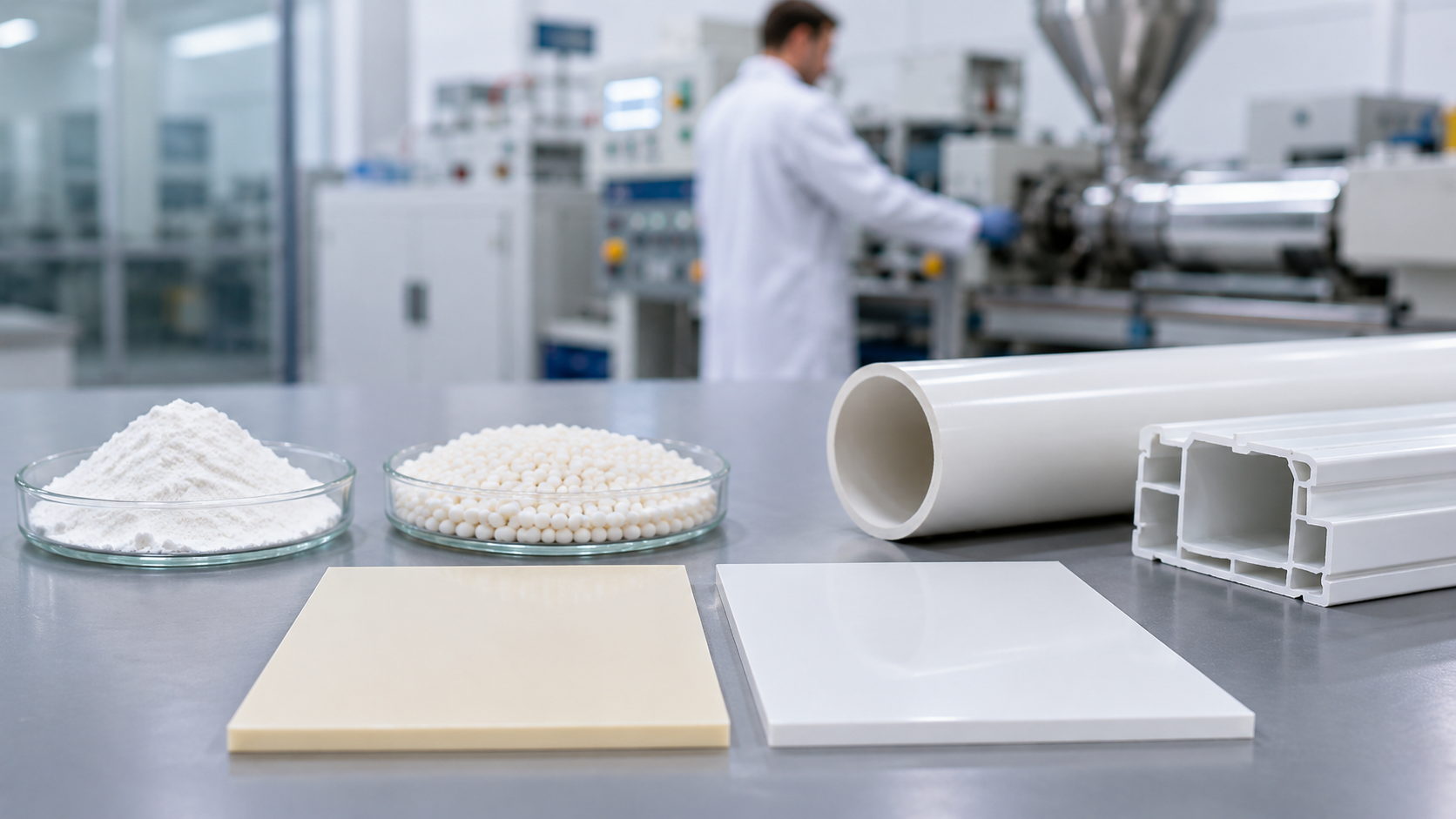
A Ca-Zn stabilizer is widely used in modern PVC manufacturing because it supports lead-free production, low-odor processing and broader compliance needs. It is commonly applied in pipes, fittings, profiles, wire and cable, flooring, transparent PVC and recycled PVC formulations.
AIMSEA positions its calcium-zinc PVC stabilizers as lead-free and eco-friendly systems for rigid, flexible, transparent and recycled PVC applications. The company also highlights high clarity, low haze, yellowing control and low-odor processing for transparent PVC products.
Why Ca-Zn Stabilizer Needs Good Formulation Design?
Ca-Zn stabilizers are not one-size-fits-all. Their performance depends on the balance of calcium soap, zinc soap, co-stabilizers, lubricants and processing aids.
If zinc content or co-stabilizer balance is not well controlled, long-term heat stability may not be ideal. If lubrication is not adjusted, plate-out, poor gloss or delayed fusion may occur. For transparent PVC, dispersion and refractive behavior are also important.
This is why pvc thermal stability should be tested with the actual product formula, not only by comparing stabilizer chemistry names.
Transparent PVC Testing: How to Check Yellowing and Haze?
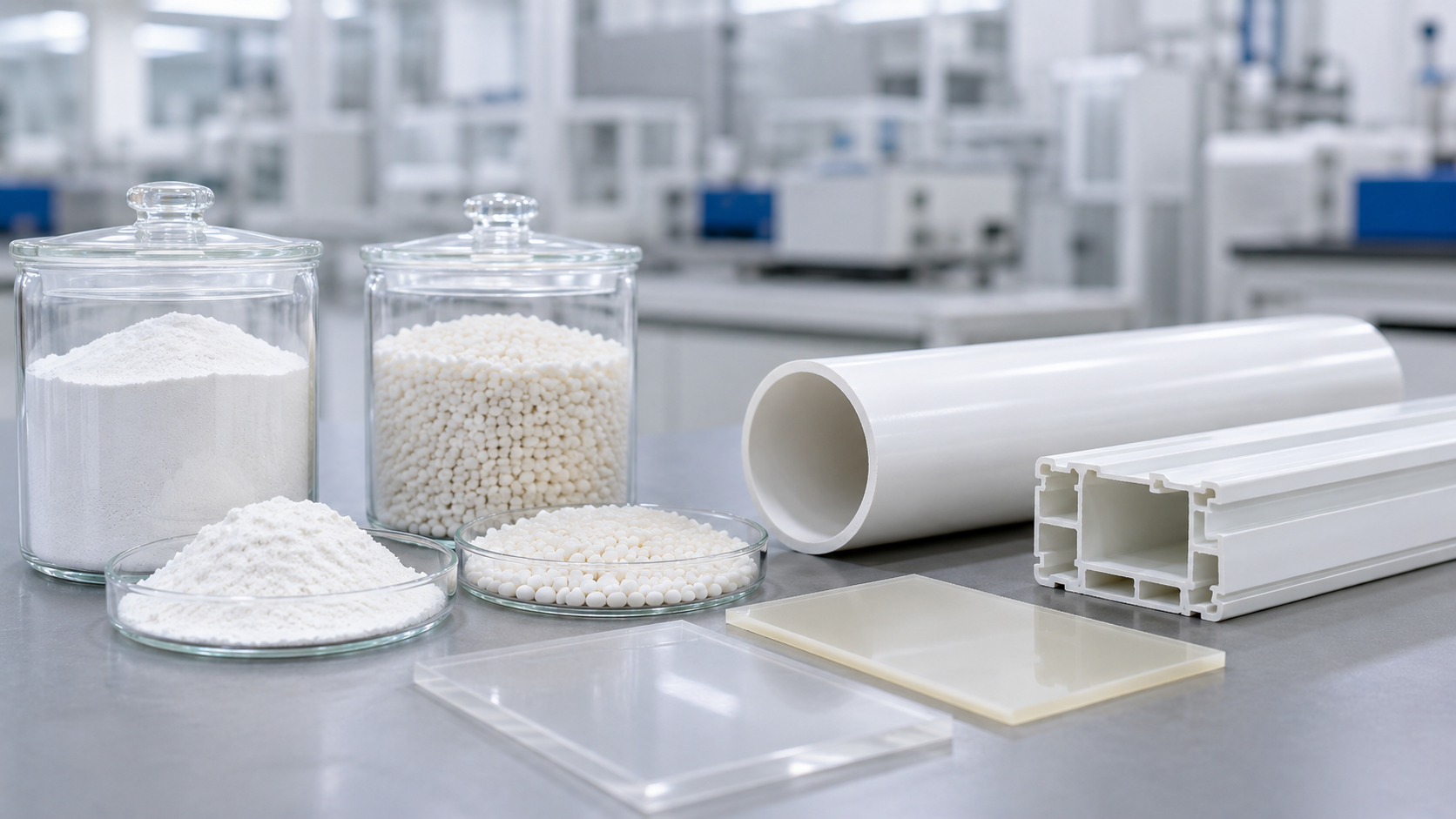
Transparent PVC has stricter visual requirements than many opaque products. A slight yellow tone, haze increase or surface defect can make the product unacceptable.
For clear sheet, rigid sheet, shrink film, transparent film, hose and packaging, manufacturers should test both heat stability and optical performance. AIMSEA’s PVC stabilizer page states that its ultra-clear transparent PVC solutions are designed to support high clarity, low haze, yellowing control and stable Ca-Zn processing.
Recommended Transparent PVC Test Items
Test Item | Why It Matters |
Static heat aging | Shows color change over heating time |
Dynamic processing test | Simulates machine shear and heat history |
Light transmission | Measures clarity performance |
Haze test | Shows whether the product becomes cloudy |
Yellowness index | Quantifies yellowing instead of relying on visual judgment |
Surface gloss | Checks compatibility and surface quality |
Plate-out observation | Shows whether additives migrate or deposit |
Odor evaluation | Important for packaging, indoor and daily-use products |
AIMSEA’s internal CZ-186 testing material includes transparent sheet testing for heat aging, light transmission, haze, tensile strength and physical performance comparison, which is relevant to transparent PVC stabilizer evaluation.
Troubleshooting Table for PVC Yellowing Problems
The fastest way to solve PVC yellowing is to connect the visible symptom with the likely cause.
Yellowing Symptom | Possible Cause | What to Check First | Stabilizer Direction |
Yellowing appears immediately after discharge | Weak initial color or high processing temperature | Temperature profile, stabilizer dosage, dry blend quality | Improve initial color hold |
Color gets darker during long runs | Poor long-term heat stability | Residence time, die build-up, continuous aging test | Strengthen long-term stability |
Transparent PVC becomes yellow and hazy | Heat degradation plus poor dispersion or lubrication | Haze, light transmission, lubricant balance | Use transparent-grade Ca-Zn or tin-reduction system |
Yellow streaks appear irregularly | Material flow, dead zones or contamination | Die, screw, filter, raw material batch | Improve processing and filtration |
Yellowing occurs with plate-out | Incompatibility or excessive lubricant migration | Roller/die deposits, lubricant dosage | Rebalance stabilizer-lubricant system |
Recycled PVC yellows faster | Residual degradation or mixed stabilizer systems | Recycled material quality, odor, color history | Use customized stabilizer and deodorizer if needed |
How to Prevent PVC Yellowing Before Bulk Production?
Preventing yellowing is more efficient than correcting it after production starts. Before switching stabilizers or scaling up a new formulation, manufacturers should run a structured trial.
Step 1: Define the Product and Visual Standard
For white products, define whiteness and color tolerance. For transparent products, define haze, light transmission and yellowness index. For colored products, define shade control and batch consistency.
Step 2: Check the Processing Window
Run the formulation at normal temperature, slightly higher temperature and longer residence time. This helps show whether the formula has enough safety margin.
Step 3: Test Stabilizer and Lubricant Together
Do not evaluate the stabilizer separately from the lubricant system. The best anti-yellowing result usually comes from the right balance of heat stability, fusion behavior and surface control.
Step 4: Run a Continuous Production Trial
Short lab tests are useful, but continuous running reveals hidden issues such as color drift, plate-out, torque fluctuation, odor increase and output instability.
Step 5: Confirm Compliance Direction
For export manufacturers, lead-free and heavy-metal control are becoming more important. TüV Rheinland notes that the EU restriction on lead in PVC articles sets a 0.1% lead concentration limit by weight of PVC material, effective November 29, 2024.
This market direction makes Ca-Zn stabilizer testing more relevant for manufacturers that want to reduce compliance risk and serve regulated markets.
FAQs About PVC Yellowing
Why does PVC turn yellow when heated?
PVC turns yellow when heat triggers degradation. During this process, HCl may be released and conjugated structures may form. These structures absorb visible light differently, causing the product to become yellow, orange or brown.
Does yellowing mean the PVC is burnt?
Not always. Early yellowing may mean the material has begun to degrade, but it is not necessarily burnt. However, if yellowing continues and black specks appear, the heat history or formulation problem is more serious.
Can adding more stabilizer solve PVC yellowing?
Not always. More stabilizer may improve heat stability in some cases, but excessive dosage can cause plate-out, poor surface gloss or compatibility issues. Temperature, residence time, lubricant balance and raw material quality must also be checked.
Is Ca-Zn stabilizer suitable for transparent PVC?
Yes, but it must be a transparent-grade Ca-Zn system. Transparent PVC requires high clarity, low haze, yellowing control, good dispersion and low odor. A general-purpose Ca-Zn stabilizer may not meet these requirements.
Why does PVC turn yellow during calendering?
Calendering exposes PVC to heat, shear and roller contact for a relatively long time. If the stabilizer-lubricant system is not balanced, yellowing, haze, sticking or plate-out may occur.
How do I test PVC thermal stability?
Common tests include static heat aging, dynamic heat stability, torque rheometer testing, oven aging, yellowness index, light transmission, haze testing and continuous production trials.
Conclusion
PVC yellowing is not just a color defect. It is a warning sign that the formulation, processing temperature, residence time or stabilizer-lubricant balance may not be under control.
Good pvc thermal stability helps manufacturers maintain color, clarity, surface finish and line consistency during real processing. For transparent PVC, the requirement is even higher because yellowing and haze are immediately visible. For export-oriented manufacturers, lead-free Ca-Zn stabilizers are also becoming more important due to stricter compliance expectations.
The best solution is not simply to add more stabilizer. A better approach is to define the yellowing pattern, check the processing window, review the lubricant balance, test the actual formula and choose a stabilizer system designed for the final application.
References
1. PVC degradation can release HCl and form polyene sequences, causing yellow, orange, red, brown and nearly black discoloration.
2. AIMSEA provides lead-free Ca-Zn PVC stabilizers and customized solutions for transparent PVC, pipes, profiles, flooring, cables and recycled PVC applications.
3. TüV Rheinland summarizes the EU REACH lead restriction in PVC articles, including the 0.1% concentration limit and November 29, 2024 effective date.
4. AIMSEA internal CZ-186 transparent PVC testing material was used as background for heat aging, HCl release, haze and light transmission discussion.
Table of Contents
Copyright © Shenzhen Zhihai Industrial Co., LTD.
Digital Marketing : CTMON


×
CONTACT US
We use cookies to allow our website to function properly, personalize content and advertising, provide social media functionality, and analyze traffic. We also share information about your use of our website with social media, advertising, and analytics partners.
Agree
Reject

loading...