
What Is PVC Stabilizer? Uses, Types and Selection Guide for PVC Manufacturers
Read:37
Source:
Abstract
A PVC stabilizer is an additive system used to protect polyvinyl chloride from heat degradation, yellowing, discoloration, poor processing stability and performance loss during extrusion, calendering, injection molding or compounding.
For PVC manufacturers, choosing the right stabilizer is not only a matter of chemical type. The decision should match the final product, processing temperature, transparency requirement, lubrication balance, compliance target and quality standard. This guide explains why PVC needs stabilizers, compares Ca-Zn, lead, tin and one-pack stabilizer systems, and shows how manufacturers can select a suitable PVC heat stabilizer by application.
What Is PVC Stabilizer and Why Does PVC Need It?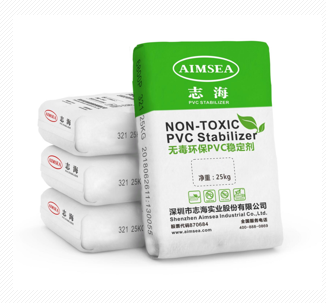
A simple answer to what is PVC stabilizer is this: it is the protection system that allows PVC to survive real processing conditions.
PVC resin has many advantages, including mechanical strength, chemical resistance, design flexibility and wide application coverage. It is used in pipes, fittings, profiles, wire and cable, flooring, transparent sheet, film, artificial leather, packaging and many other products. However, raw PVC is not naturally stable enough for high-temperature industrial processing.
During extrusion, calendering, injection molding or high-speed mixing, PVC is exposed to heat and shear. Without a suitable stabilizer, PVC can release hydrogen chloride, form conjugated double bonds, turn yellow or brown, and gradually lose mechanical performance. Research on PVC degradation shows that yellowing is strongly related to the formation of conjugated structures during thermal degradation.
This is why PVC quality is rarely determined by resin alone. In real production, the final result depends on the full formulation: PVC resin, plasticizer when needed, filler, lubricant, processing aid, pigment and the stabilizer system.
Common Factory Symptoms of Poor PVC Stabilization
When the PVC stabilizer is not matched to the formulation or process, manufacturers may see:
Early yellowing during processing
Color drift after continuous production
Black specks or burnt marks
Plate-out on rollers, molds or dies
Unstable torque or fusion behavior
Poor surface gloss
Haze increase in transparent PVC
Lower impact strength or brittleness
Odor problems in indoor or transparent products
These problems are often treated as machine issues, but many of them are formulation issues. A PVC stabilizer must work together with lubricants, processing temperature, residence time and production speed.
What a PVC Stabilizer Actually Does?
A PVC stabilizer helps in four practical ways:
Function | Why It Matters in Production |
Heat protection | Slows PVC degradation during high-temperature processing |
Color control | Reduces yellowing, browning and color drift |
Processing stability | Helps maintain stable fusion, torque and line output |
Product protection | Supports clarity, surface finish, durability and mechanical performance |
For manufacturers, the key question is not only what is PVC stabilizer, but which stabilizer system can keep the production line stable under actual factory conditions.
PVC Heat Stabilizer: What Happens During Processing
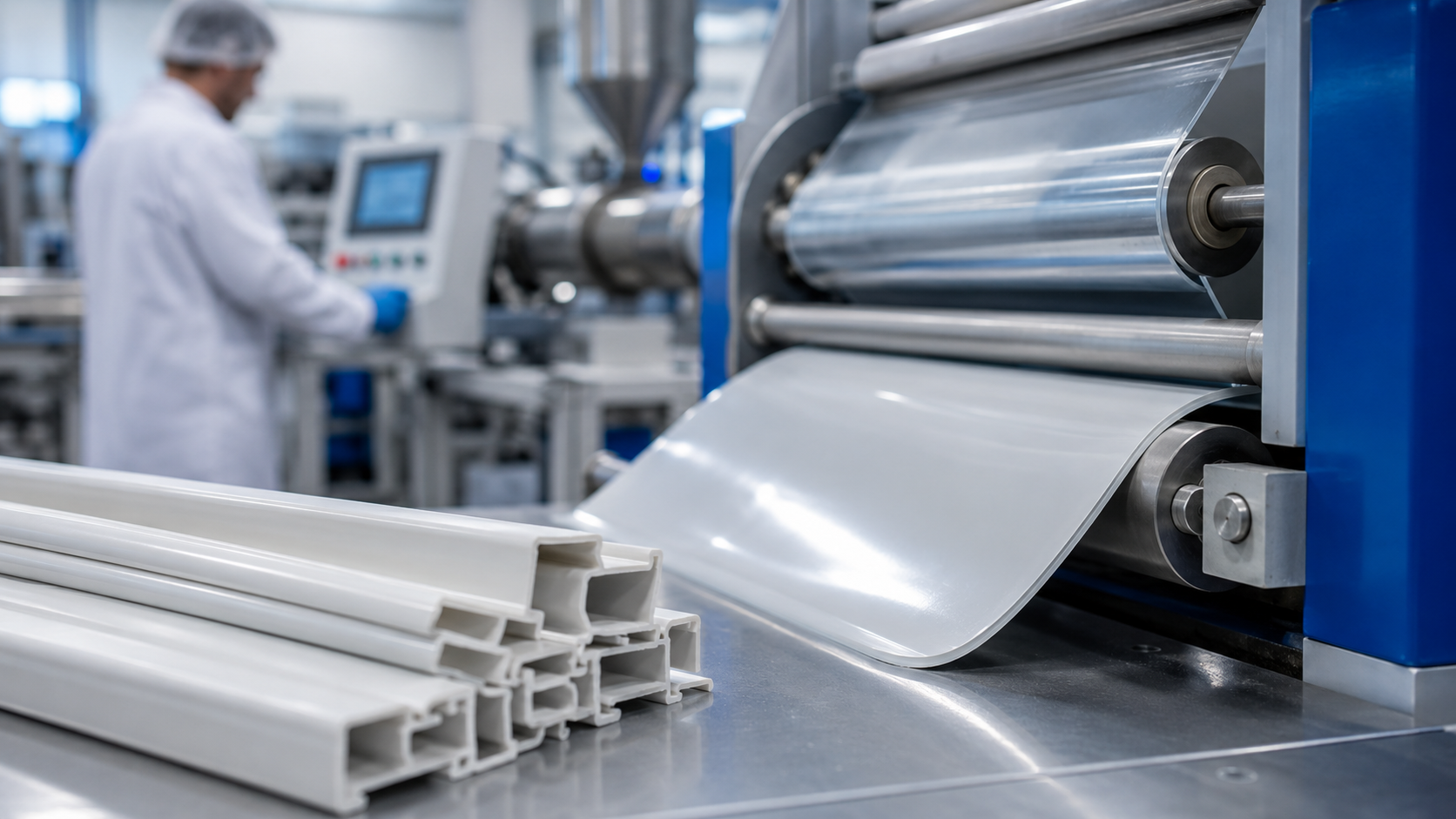
A PVC heat stabilizer should be evaluated by how it behaves on the machine, not only by its chemical category. In production, the stabilizer must interact with processing temperature, residence time, resin K value, filler loading, lubricant package and output speed.
When PVC begins to degrade, hydrogen chloride can be released. If this process continues, degradation accelerates, color deepens and material performance declines. Heat stabilizers help reduce this chain reaction and improve the processing window.
AIMSEA’s internal testing material also describes the same practical observation: as heating time increases, transparent PVC samples may change from white or light color to yellow, reddish brown and black because PVC degradation releases HCl and forms conjugated structures.
Processing Problems and Stabilizer-Related Causes
Processing Issue | What the Factory Sees | Possible Stabilizer-Related Cause | What to Check |
Yellowing | Sheet, pipe or profile turns yellow too early | Weak initial color hold or excessive heat history | Static heat test, oven aging, color comparison |
Plate-out | Deposits on die, roller or mold | Lubrication imbalance or additive incompatibility | Continuous run test, die lip inspection |
Haze | Transparent PVC becomes cloudy | Poor dispersion, wrong additive system or over-lubrication | Haze and light transmission test |
Torque instability | Fusion changes batch to batch | Stabilizer-lubricant system not matched | Torque rheometer curve |
Odor | Finished products smell strong | Stabilizer type, lubricant, recycled material or residual additives | Odor test, raw material traceability |
Brittleness | Product cracks after processing or aging | Thermal degradation or poor formulation balance | Impact test, tensile test, aging test |
Industry selection guidance also shows that lubrication is especially important in rigid PVC processing. Some tin stabilizers, for example, are essentially non-lubricating and often require more external lubricant in rigid PVC systems.
Types of PVC Stabilizers: Ca-Zn, Lead, Tin and One Pack
There are several types of PVC stabilizers, but manufacturers usually compare four systems first: calcium-zinc, lead, tin and one-pack stabilizers.
Stabilizer Type | Main Strength | Common Applications | Watch-Out Points | Market Direction |
Calcium-Zinc Stabilizer | Lead-free, low odor, broad application range | Pipes, fittings, profiles, cables, flooring, transparent PVC | Requires good formulation design; lubrication balance matters | Strong growth due to compliance and safer material demand |
Lead Stabilizer | Strong heat stability and cost advantage in some legacy markets | Rigid PVC pipes, profiles and cable compounds in older systems | Toxicity and export compliance risk | Being replaced in many regulated and export markets |
Tin Stabilizer | Excellent transparency and strong heat stability | Clear rigid sheet, transparent film, packaging and high-clarity products | Higher cost, odor, lubrication adjustment, regulatory attention | Still important for clear PVC, but tin-reduction solutions are gaining interest |
One Pack PVC Stabilizer | Integrated stabilizer, lubricant and processing package | Pipes, profiles, flooring, cable, board and custom compounding | Must be customized by application | Useful for reducing batching error and improving production consistency |
The right choice depends on whether the product is rigid or flexible, transparent or opaque, indoor or outdoor, food-contact related or construction-grade, export-oriented or local-market focused.
Calcium-Zinc Stabilizer for Lead-Free PVC Manufacturing
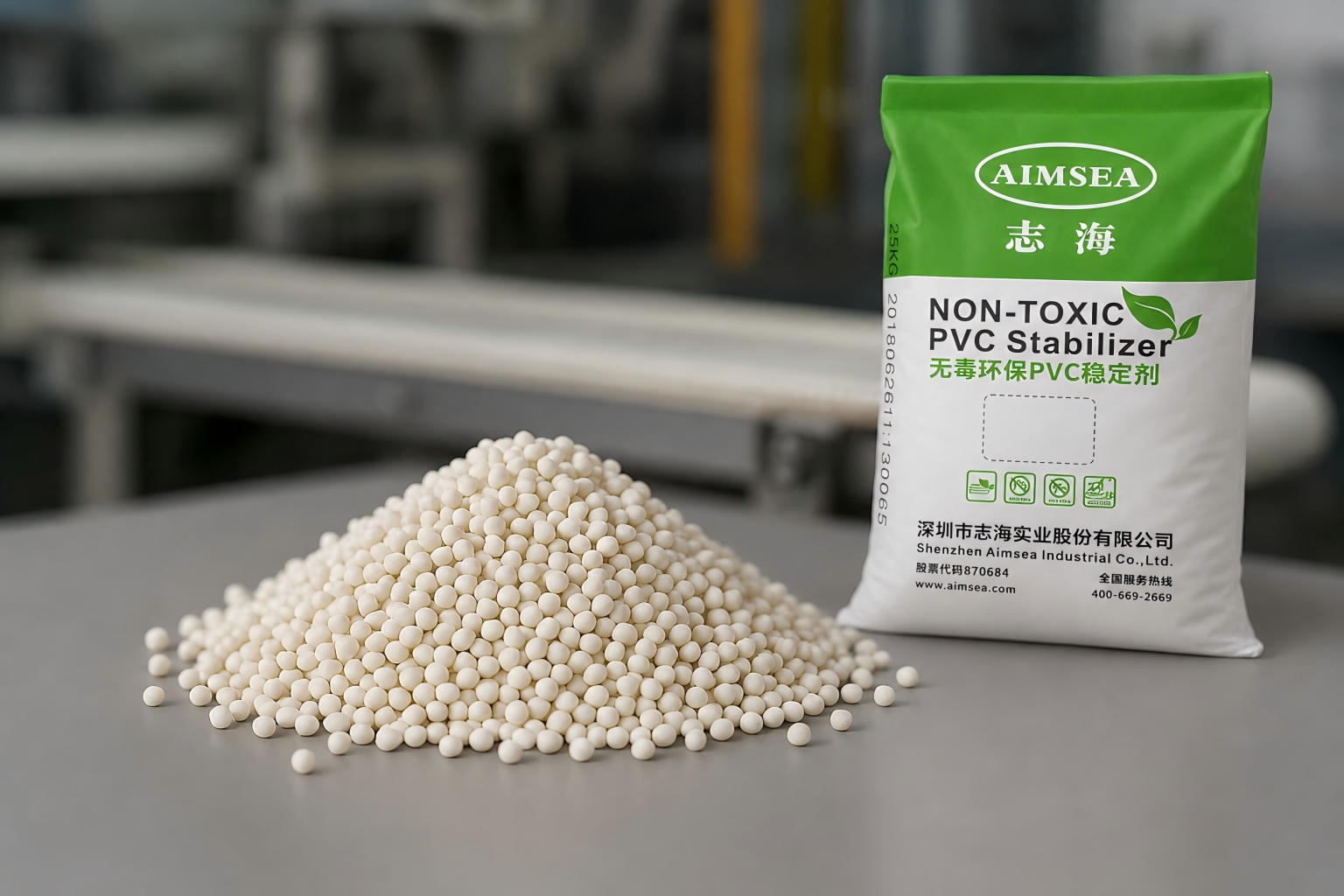
A calcium-zinc stabilizer is now one of the most practical choices for manufacturers that want lead-free PVC processing. It is widely used because it supports environmental compliance, reduces heavy-metal concerns and fits many rigid and flexible PVC applications.
For PVC manufacturers, Ca-Zn is not simply a “green replacement.” Its value depends on the complete formula design. A good Ca-Zn system should help balance:
Initial whiteness or transparency
Heat stability under continuous processing
Lubrication and fusion behavior
Low odor performance
Surface gloss and smoothness
Compatibility with fillers, plasticizers and processing aids
Compliance support for export markets
AIMSEA positions its PVC stabilizer solutions around lead-free calcium-zinc systems, customized heat stabilizers and additive packages for pipes, fittings, profiles, flooring, cables, transparent products and recycled PVC applications.
For transparent PVC, Ca-Zn selection is more demanding. The stabilizer must support clarity, low haze and yellowing control. This is why manufacturers producing clear sheet, rigid sheet, shrink film, transparent film, hose or packaging products should not use a general-purpose stabilizer without testing.
Tin Stabilizer for Transparent PVC Products
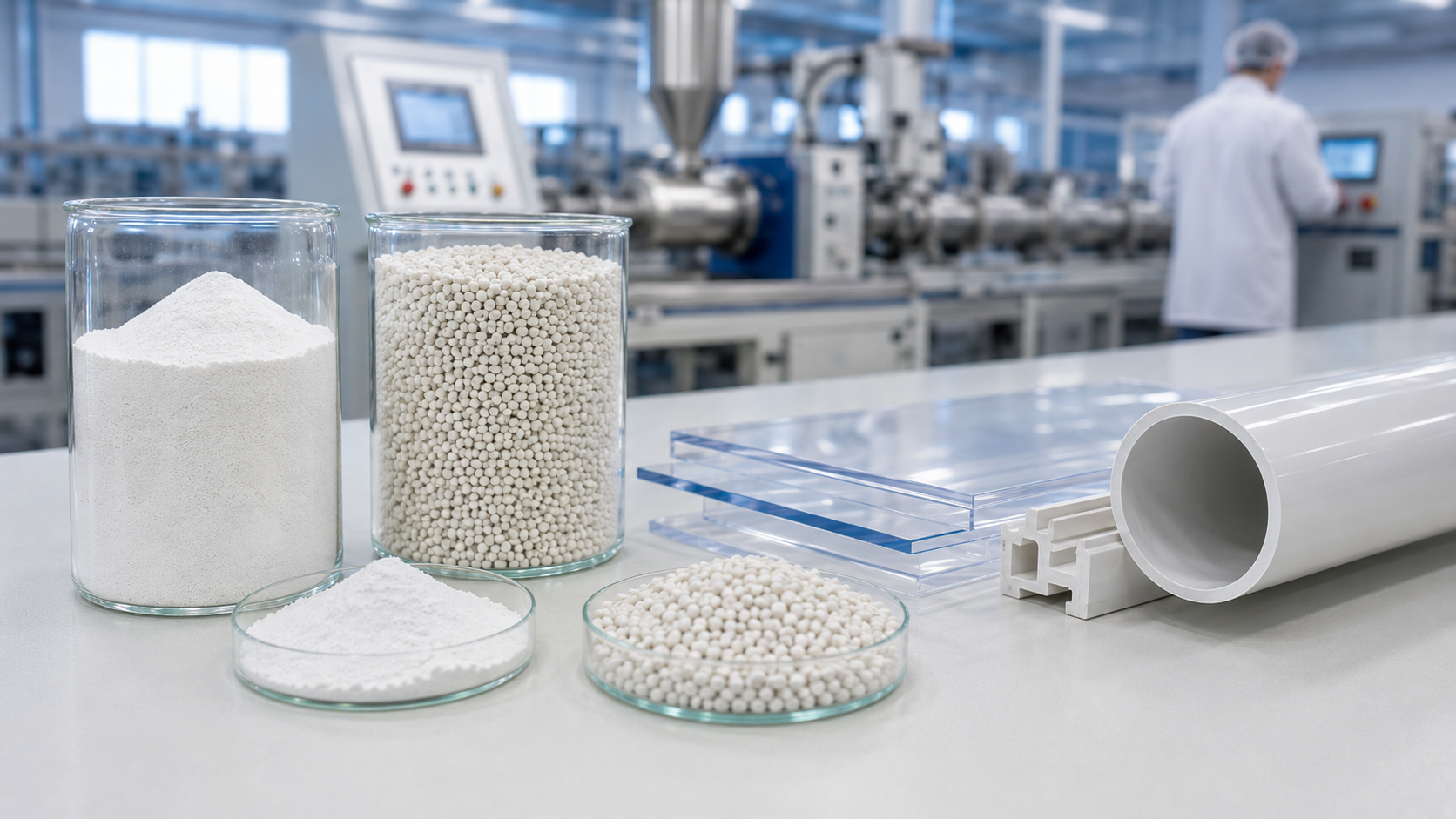
A tin stabilizer for PVC is often selected when transparency and heat stability are the top priorities. In clear rigid PVC sheet, transparent film and packaging-related applications, organotin systems are still valued for clarity and processing stability.
However, PVC manufacturers increasingly ask a practical question: can tin usage be reduced without sacrificing clarity?
This question is driven by several factory and market concerns:
Tin stabilizers can be more expensive.
Some tin systems may bring odor concerns.
Lubrication balance often needs adjustment.
Export buyers may request safer or lower-odor material options.
Transparent PVC manufacturers still need high clarity, low haze and stable color.
For this reason, tin-reduction and tin-companion systems are becoming more relevant. AIMSEA’s CZ-186 internal testing material describes it as a non-toxic calcium-zinc stabilizer used together with organotin. In transparent sheet testing, a formulation using part CZ-186 and part organotin achieved similar physical performance to a full organotin formulation, while supporting cost reduction and lower odor direction.
This does not mean every tin formulation can be replaced directly. For clear PVC, sample trials are essential. The supplier should test transparency, haze, yellowing, fusion, surface gloss and long-term heat stability before any production change.
One Pack PVC Stabilizer for Easier Production Control
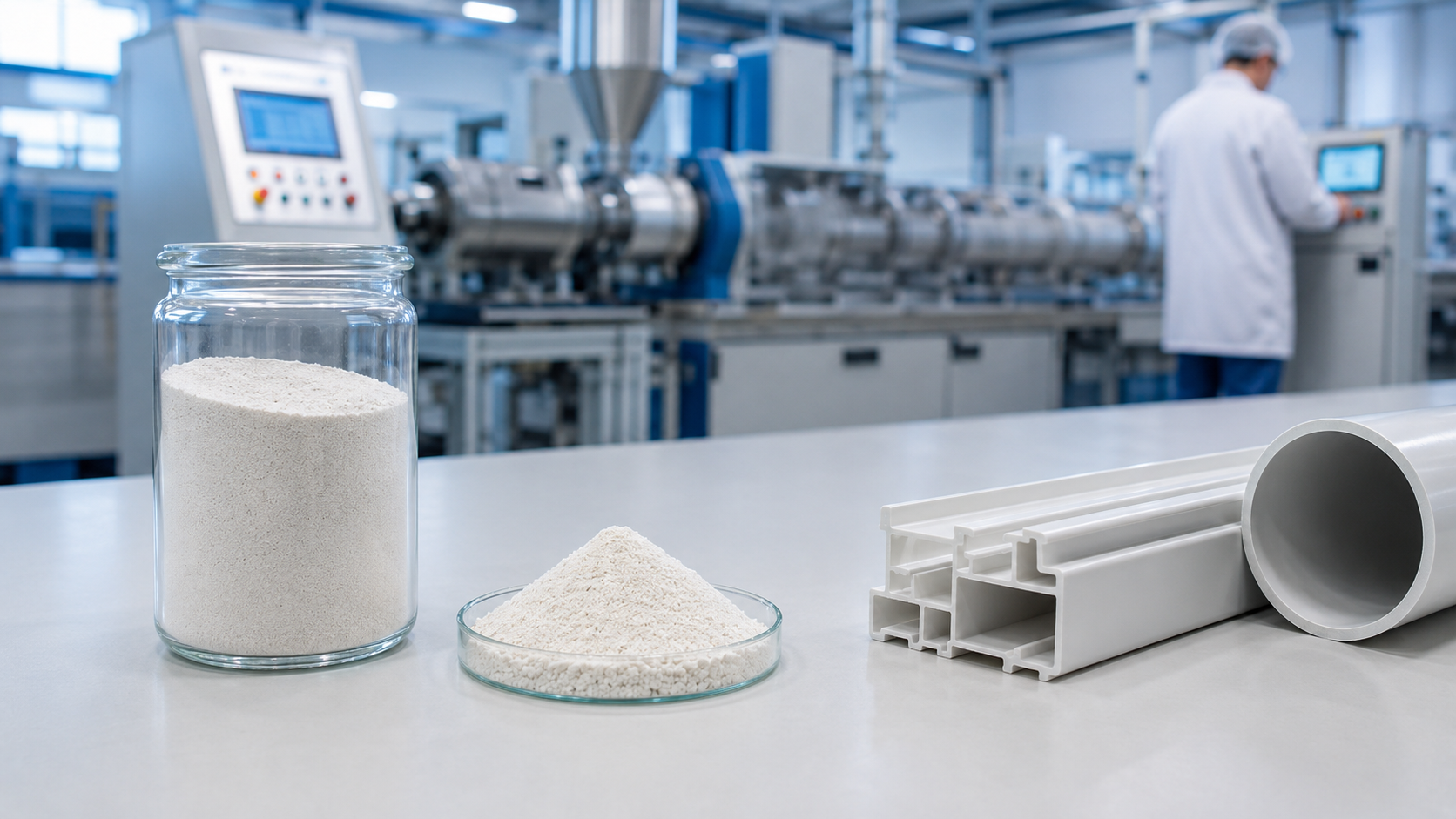
A one pack PVC stabilizer is an integrated additive system. It may combine heat stabilizer, lubricants and other processing aids into one ready-to-use package. For manufacturers, the goal is not only stabilization but easier production control.
One-pack systems are useful when factories want to:
Reduce weighing and batching errors
Shorten formulation adjustment time
Improve batch consistency
Simplify purchasing and inventory
Stabilize extrusion or calendering performance
Support operators with less formulation experience
This is especially useful for SMEs or factories producing pipes, profiles, boards, flooring, cables or other standardized PVC products. Instead of managing multiple additives separately, the manufacturer can use a pre-balanced system designed for the product and process.
Still, a one-pack stabilizer should not be treated as a universal shortcut. A pipe one-pack stabilizer is not the same as a transparent sheet one-pack system. The supplier must know the resin, filler, plasticizer, processing temperature, equipment type, output target and final product standard.
PVC Stabilizer Selection Guide by Application
The best PVC stabilizer selection guide starts with the finished product, not the stabilizer name.
PVC Application | Recommended Stabilizer Direction | Key Performance Target | Required Trial Test |
Transparent PVC sheet, film, hose and packaging | Ultra-clear Ca-Zn, tin or tin-reduction system | High clarity, low haze, yellowing control, low odor | Haze, light transmission, oven aging, production trial |
PVC pipes and fittings | Ca-Zn or one-pack stabilizer | Heat stability, dimensional control, smooth extrusion, pressure performance | Torque curve, extrusion trial, impact test |
PVC profiles | Ca-Zn stabilizer | Initial whiteness, weatherability, weld strength, clean production | Weathering test, color hold, weld strength |
PVC wire and cable | Ca-Zn cable stabilizer | Thermal stability, electrical insulation, flexibility, low moisture absorption | Congo red, insulation test, aging test |
SPC, LVT and vinyl flooring | Ca-Zn or customized additive package | Color stability, dimensional control, low odor | Calendering or extrusion trial, odor test |
PVC foam board | Application-specific one-pack or Ca-Zn system | Foam structure, surface smoothness, cell uniformity | Density, surface, extrusion stability |
Recycled PVC | Customized stabilizer plus deodorizer if needed | Odor control, compatibility, stable processing | Odor test, color control, continuous run |
A Practical Five-Step Selection Process
1. Define the finished PVC product.
2. Confirm the processing method and temperature window.
3. List the visible quality targets.
4. Check compliance requirements.
5. Run a sample trial before bulk replacement.
This approach helps prevent a common mistake: choosing a stabilizer only because it worked in a different PVC product.
Lead Free PVC Stabilizer and Export Compliance
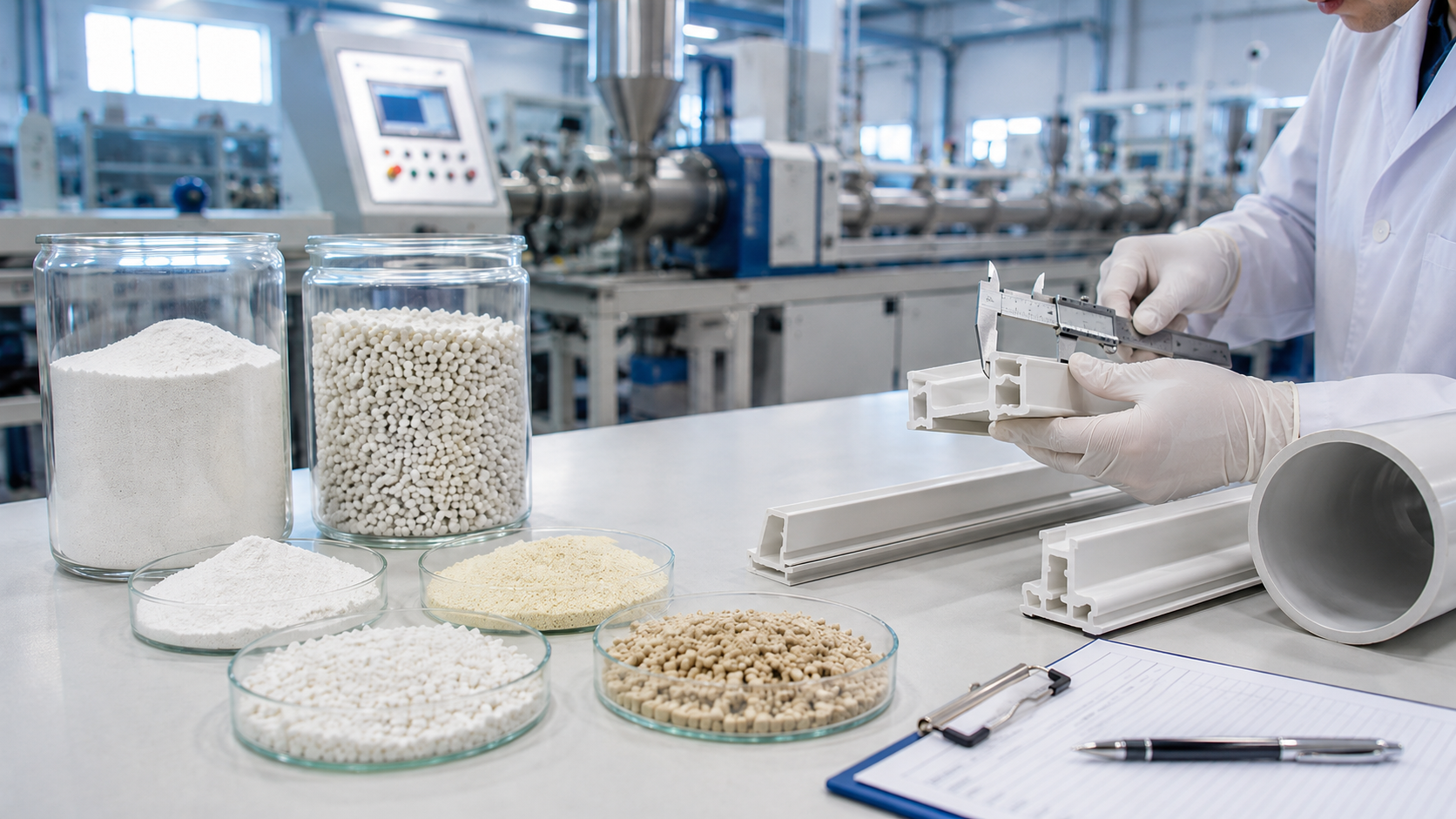
A lead free PVC stabilizer is becoming more important for export-oriented manufacturers. In the European Union, Commission Regulation (EU) 2023/923 amended REACH Annex XVII regarding lead and its compounds in PVC. The regulation restricts lead in PVC articles and is intended to prevent the intentional addition of lead compounds as stabilizers during PVC compounding and production.
This matters for manufacturers selling PVC products into regulated markets. A product that performs well in local processing may still face problems if buyers require REACH, RoHS, food-contact, drinking-water-related or internal brand compliance documentation.
For export orders, manufacturers should ask stabilizer suppliers for:
SDS
COA
Heavy metal test support
RoHS or REACH-related documentation when applicable
Food-contact or drinking-water-related support when required
Sample test data from similar applications
Clear statement on lead-free formulation direction
Compliance is not only a sales document. It must be connected with the actual formula and production batch.
How to Request the Right PVC Stabilizer Sample?
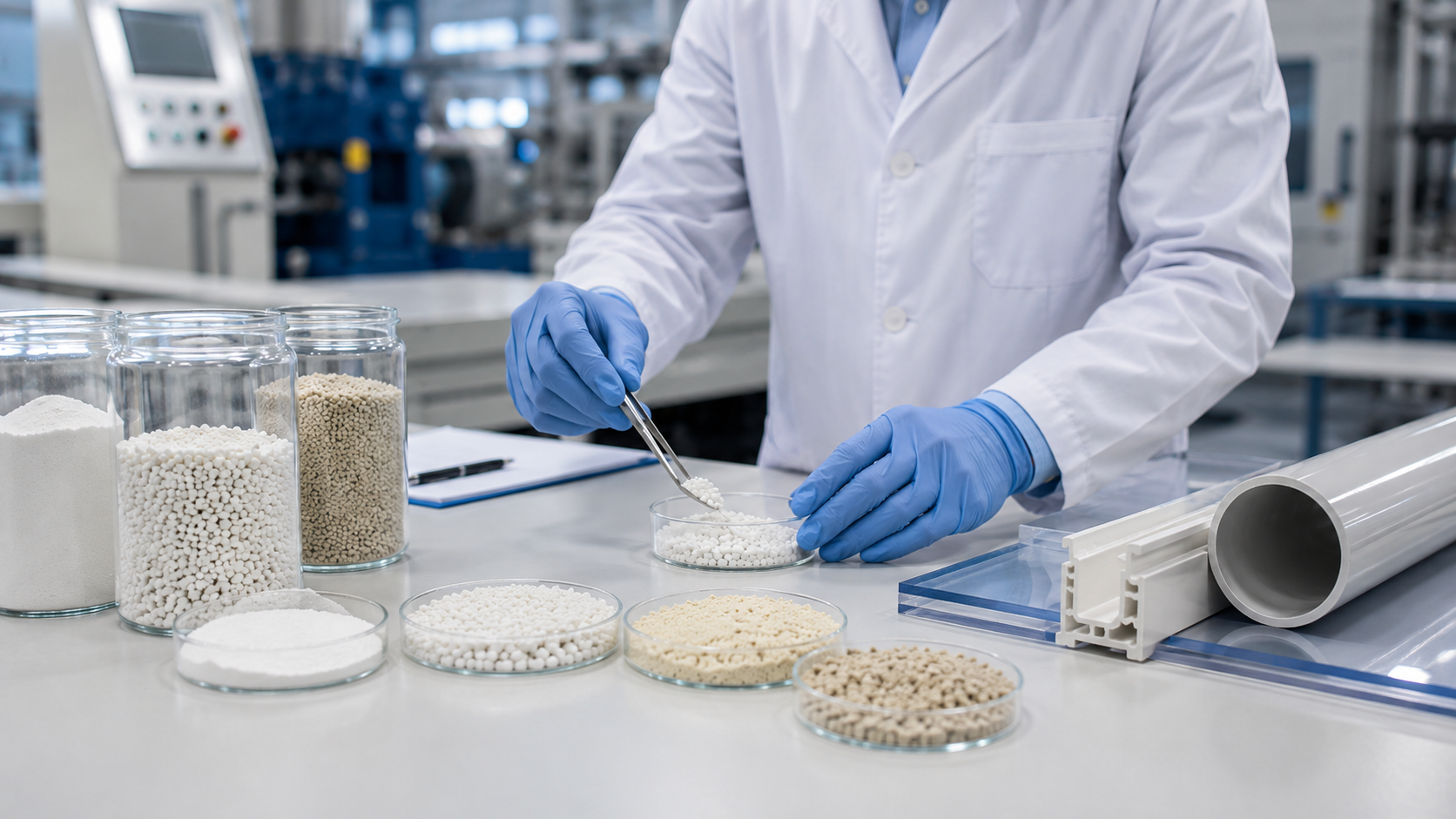
To get a useful recommendation from a PVC stabilizer supplier, manufacturers should not only ask for “a good stabilizer.” They should provide production details.
Send the supplier:
PVC product type
Rigid or flexible formulation
Resin grade and K value
Filler type and loading
Plasticizer type if used
Current stabilizer type and dosage
Processing method: extrusion, calendering, injection molding or compounding
Processing temperature range
Current production issue: yellowing, haze, odor, plate-out, poor fusion or black specks
Required standards or target market
Desired improvement: clarity, cost, compliance, output, odor reduction or processing stability
For transparent PVC products, also provide haze, light transmission and yellowing requirements. For pipe and profile products, provide output speed, die condition, impact requirements and color standard. For cable compounds, provide thermal aging and electrical requirements.
A good supplier should respond with a testable formulation direction, not a vague product name.
FAQs About PVC Stabilizers
What is PVC stabilizer used for?
A PVC stabilizer is used to protect PVC from heat degradation during processing and service life. It helps improve thermal stability, color retention, processing consistency, surface quality and final product durability.
What is the best stabilizer for PVC?
There is no single best stabilizer for all PVC products. Calcium-zinc stabilizers are widely used for lead-free and low-odor PVC. Tin stabilizers are often used for high-clarity transparent PVC. One-pack stabilizers are suitable when manufacturers need simplified compounding and stable production.
Why does PVC turn yellow during processing?
PVC turns yellow mainly because heat degradation can release HCl and form conjugated double bonds in the polymer chain. As degradation continues, the color can change from white or clear to yellow, brown and eventually darker shades.
Is calcium-zinc stabilizer better than lead stabilizer?
Calcium-zinc stabilizer is generally preferred for lead-free, safer and export-oriented PVC products. Lead stabilizers can offer strong heat stability in some legacy rigid PVC systems, but they carry regulatory and toxicity concerns in many markets.
Is one pack PVC stabilizer the same as calcium-zinc stabilizer?
Not exactly. Calcium-zinc describes the main stabilizer chemistry. One pack describes a ready-to-use additive package that may include stabilizers, lubricants and processing aids. Many one-pack systems use Ca-Zn chemistry, but they are designed around the whole formulation.
Can Ca-Zn stabilizer be used for transparent PVC?
Yes, but the grade must be designed for transparency. Transparent PVC requires careful control of haze, light transmission, yellowing, odor, dispersion and lubricant balance. Manufacturers should always test the stabilizer in their actual formula and machine conditions.
Conclusion
Understanding what is PVC stabilizer is only the starting point. The real decision is application-based.
Clear PVC needs clarity, haze control and color stability. Pipes need heat stability, smooth extrusion and dimensional control. Cables need insulation and aging performance. Profiles need initial whiteness, weld strength and weatherability. Recycled PVC needs compatibility, odor control and stable processing.
The best PVC stabilizer is not the one with the broadest claim. It is the one that keeps production stable, meets buyer compliance requirements and protects the finished product under real processing conditions.
For manufacturers moving toward lead-free, low-odor and high-transparency PVC, calcium-zinc and customized one-pack systems deserve close testing. The most reliable next step is to share the formulation, process and target application with a technical supplier, then verify performance through sample trials before making production changes.
References
1. AIMSEA PVC Stabilizer Manufacturer page: calcium-zinc stabilizers, one-pack systems and application coverage.
2. Commission Regulation (EU) 2023/923 on lead and its compounds in PVC under REACH Annex XVII.
3. SpecialChem PVC heat stabilizer selection guide, including stabilizer type and lubrication considerations.
4. Research on PVC thermal degradation and yellowing caused by conjugated structures.
5. AIMSEA internal CZ-186 organotin companion testing material for transparent PVC sheet.
Table of Contents
Copyright © Shenzhen Zhihai Industrial Co., LTD.
Digital Marketing : CTMON


×
CONTACT US
We use cookies to allow our website to function properly, personalize content and advertising, provide social media functionality, and analyze traffic. We also share information about your use of our website with social media, advertising, and analytics partners.
Agree
Reject

loading...