
What is PVC Heat Stabilizer? A Complete Guide for PVC Manufacturers
Read:28
Source:
Abstract
A PVC heat stabilizer is an additive system used to protect polyvinyl chloride from thermal degradation during extrusion, calendering, injection molding and compounding. When PVC is exposed to heat and shear, it can release hydrogen chloride, turn yellow or brown, lose processing stability and affect final product quality. For PVC manufacturers, heat stabilizers are not only used to “prevent burning.” They directly influence color retention, thermal stability, surface finish, fusion behavior, odor control, production continuity and compliance readiness.
This guide explains how PVC thermal degradation happens, what heat stabilizers do in real production, how different stabilizer systems compare, and how manufacturers can choose the right solution by application.
What is PVC Heat Stabilizer?
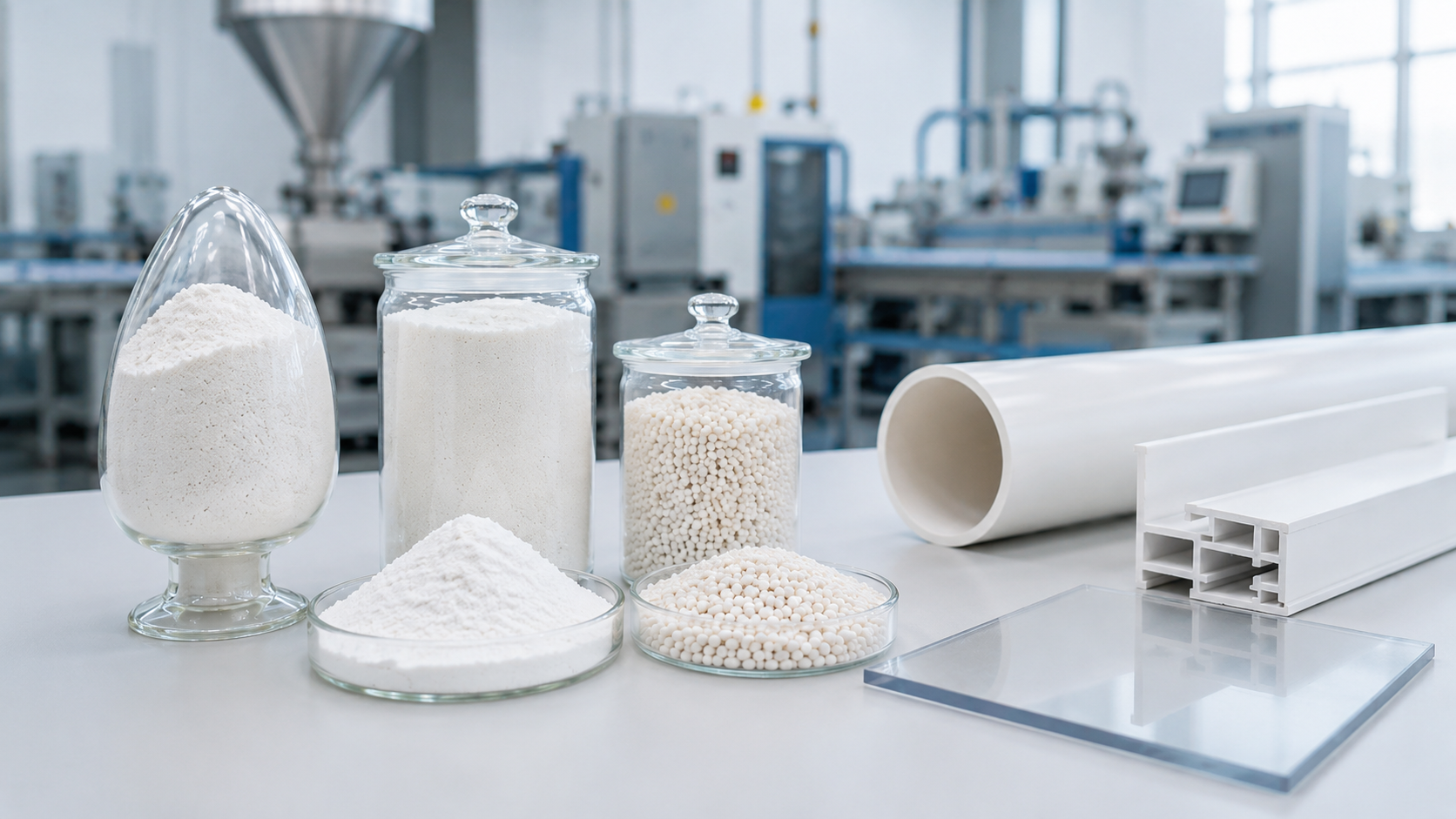
A PVC heat stabilizer is a formulation additive that protects PVC from heat-induced degradation during processing and use. It helps PVC maintain color, mechanical strength, surface quality and processing stability when the material is exposed to high temperature.
PVC is widely used in pipes, fittings, profiles, wire and cable, flooring, transparent sheet, film, artificial leather, packaging and many other products. However, PVC has a natural weakness: it is sensitive to heat. During processing, the material can begin to degrade before it is fully shaped into the final product.
For manufacturers, this means the stabilizer is not a minor additive. It is one of the core parts of the PVC formulation. Without a suitable stabilizer system, even good resin and good equipment may still produce yellowing, black specks, plate-out, poor surface gloss or unstable output.
Quick Answer
A PVC heat stabilizer protects PVC from thermal degradation by controlling HCl release, reducing discoloration, improving heat resistance and helping the production line run within a wider processing window.
Why PVC Needs Heat Stabilizers During Processing?
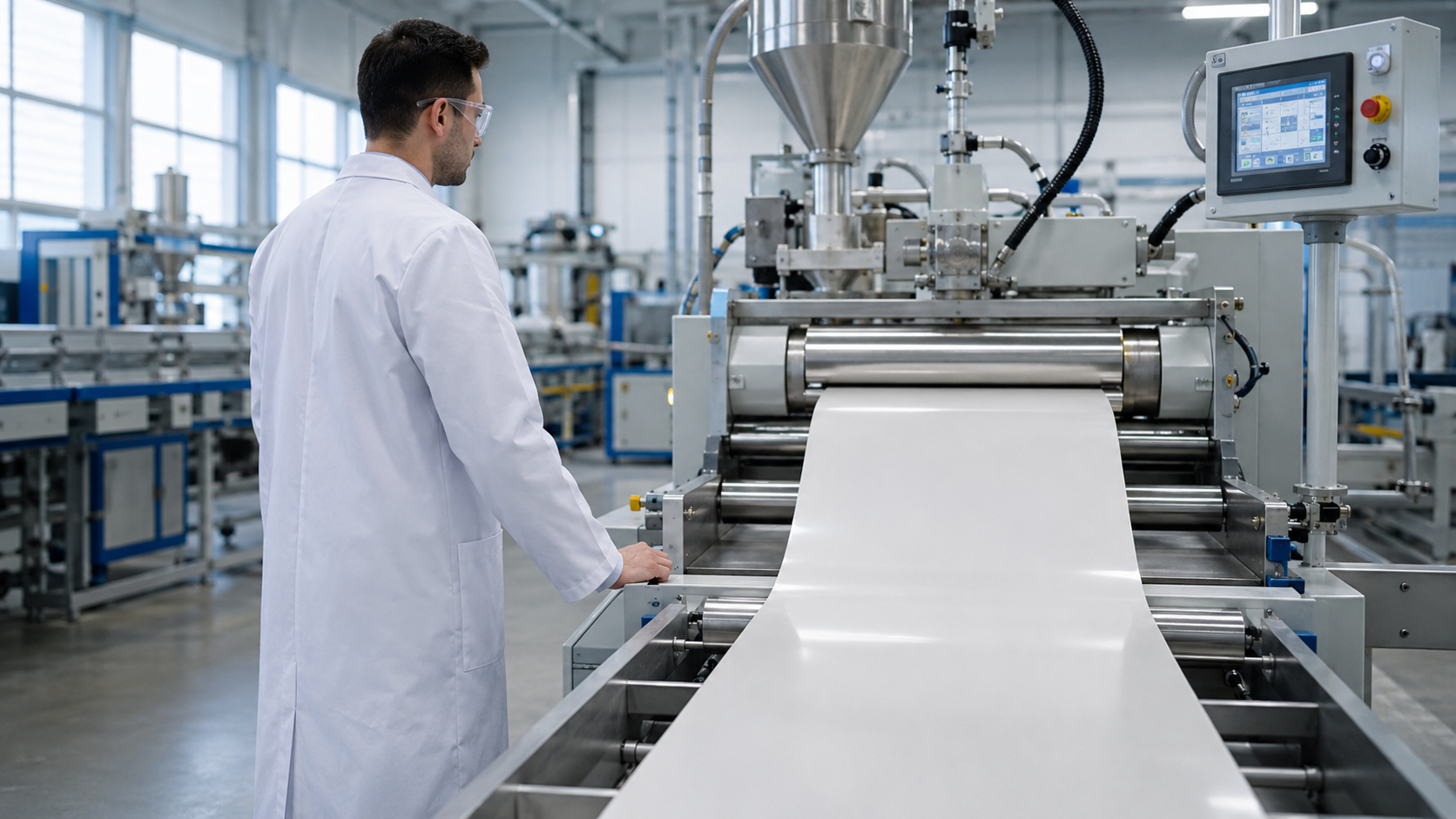
PVC degradation is closely related to dehydrochlorination. During heating, PVC can release hydrogen chloride and form conjugated double bonds. This process causes visible yellowing and can accelerate further degradation. A peer-reviewed study on PVC degradation describes the degradation process as involving dehydrochlorination, HCl elimination and the formation of conjugated double bonds.
In a factory, this chemistry appears as practical production problems:
Processing Stage | What Can Happen Without Stabilization | Factory Result |
High-speed mixing | Heat and shear start early degradation | Unstable dry blend quality |
Extrusion | HCl release and heat history increase | Yellowing, burnt marks, torque fluctuation |
Calendering | Long heat exposure affects color and surface | Haze, poor gloss, sticking, plate-out |
Injection molding | Local overheating occurs in barrel or mold | Black specks, color drift, brittle parts |
Continuous production | Small instability accumulates over time | Narrow processing window and higher scrap rate |
This is why a heat stabilizer should be selected according to real processing conditions, not only by product name.
The Real Meaning of Processing Window
A wider processing window means the formulation can tolerate normal production changes, such as slight temperature fluctuation, residence time variation, screw speed change or raw material differences. A narrow processing window usually means the line becomes sensitive: a small temperature rise may cause yellowing, while a small lubrication change may cause plate-out or poor fusion.
For manufacturers, stabilizer value is measured by how much it reduces this sensitivity.
How PVC Thermal Stability Affects Product Quality?
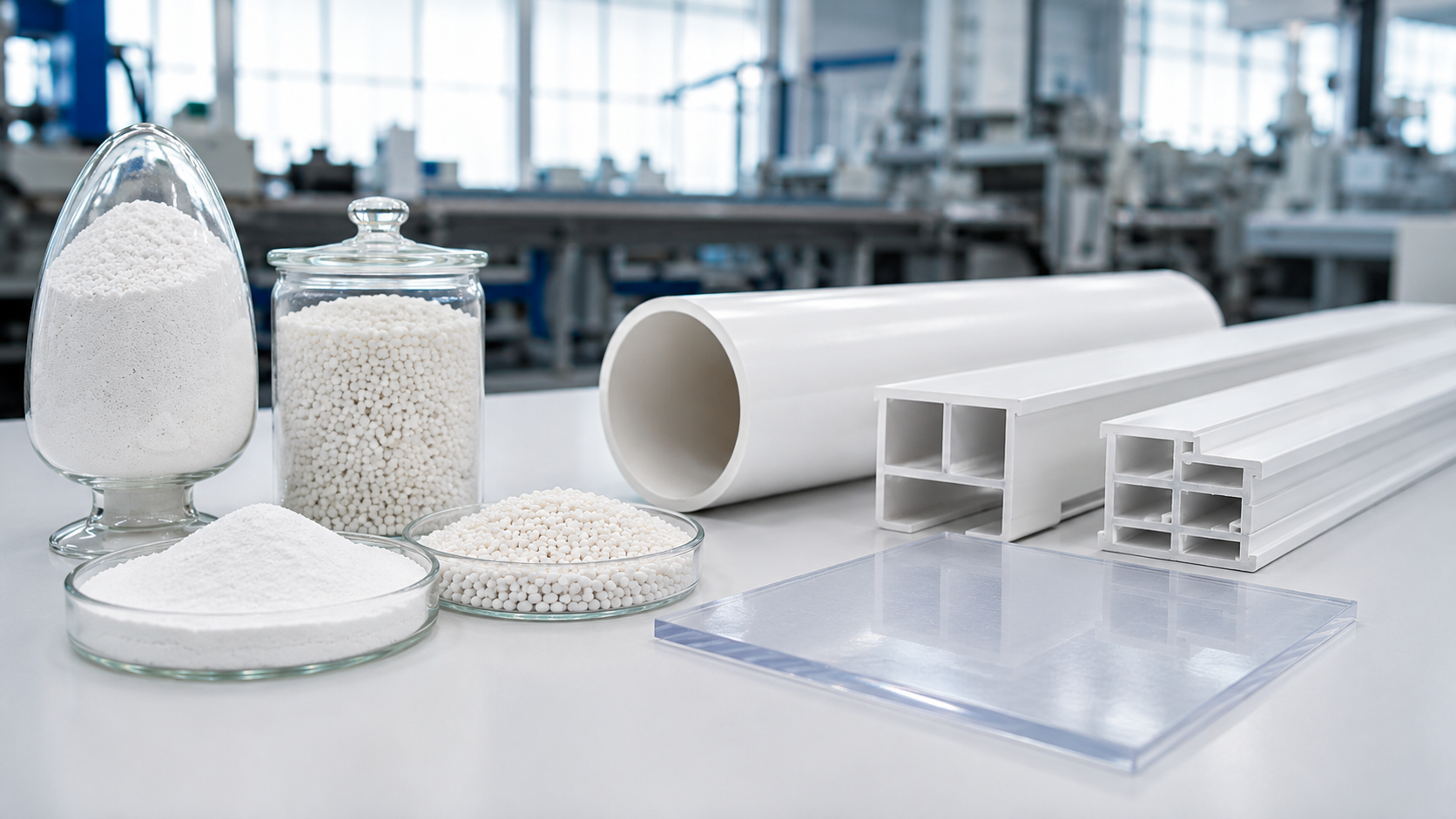
PVC thermal stability determines how long PVC can resist heat before serious degradation appears. It affects both the processing stage and the final product.
Many manufacturers first notice poor thermal stability through color. White products become cream or yellow. Transparent products lose clarity. Colored products show shade drift. But color is only the visible signal. Behind it, degradation may also affect strength, flexibility, surface finish and long-term performance.
Key Quality Areas Influenced by Heat Stabilizers
Quality Area | Why It Matters | What Buyers Usually Care About |
Initial color | Shows whether the product remains clean during early processing | Whiteness, transparency, light color tone |
Long-term heat stability | Shows whether the formula can survive continuous production | Stable output, less shutdown, lower scrap |
Surface quality | Indicates compatibility between stabilizer, lubricant and resin | Gloss, smoothness, no plate-out |
Mechanical performance | Degradation can reduce strength or increase brittleness | Impact strength, tensile strength, durability |
Odor control | Important for indoor, transparent, medical-related and daily-use products | Low odor, cleaner processing |
Compliance direction | Important for export orders and regulated markets | Lead-free, RoHS, REACH-related support |
In other words, a stabilizer is not only a “heat resistance additive.” It influences how the finished PVC product looks, performs and passes buyer evaluation.
Main Types of Heat Stabilizers for PVC
There are several heat stabilizers for PVC, but manufacturers usually compare calcium-zinc, lead, tin and one-pack systems first.
Stabilizer Type | Main Advantage | Typical Application | Limitations |
Calcium-zinc stabilizer | Lead-free, low odor, suitable for many modern PVC products | Pipes, profiles, cables, flooring, transparent PVC, flexible PVC | Requires careful formulation and lubrication balance |
Lead stabilizer | Strong heat stability and cost advantage in some legacy systems | Older pipe, profile and cable systems | Toxicity and regulatory restrictions |
Tin stabilizer | Excellent transparency and strong heat stability | Clear rigid sheet, film, packaging and transparent products | Higher cost, possible odor, lubrication adjustment needed |
One-pack stabilizer | Integrated stabilizing, lubricating and processing functions | Pipe, profile, flooring, cable and customized compounding | Must be designed for the specific application |
SpecialChem notes that tin mercaptide stabilizers are mostly non-lubricating and generally require more external lubricant in rigid PVC processing than mixed metal or lead systems. This is a good example of why stabilizer selection must consider lubrication balance, not only heat stability.
Why Chemical Type Alone Is Not Enough?
Two stabilizers with the same chemical family may behave very differently. A calcium-zinc system for cable compound may not work well for ultra-clear PVC sheet. A one-pack stabilizer for pipe extrusion may not fit calendered film. A tin system for transparent sheet may still need adjustment if the product requires lower odor or better cost control.
The right selection depends on:
1.Product type
2.Processing method
3.Resin grade
4.Filler loading
5.Lubricant system
6.Transparency requirement
7.Odor requirement
8.Target market and compliance standard
9.Existing production problem
What Problems Can a PVC Thermal Stabilizer Solve?
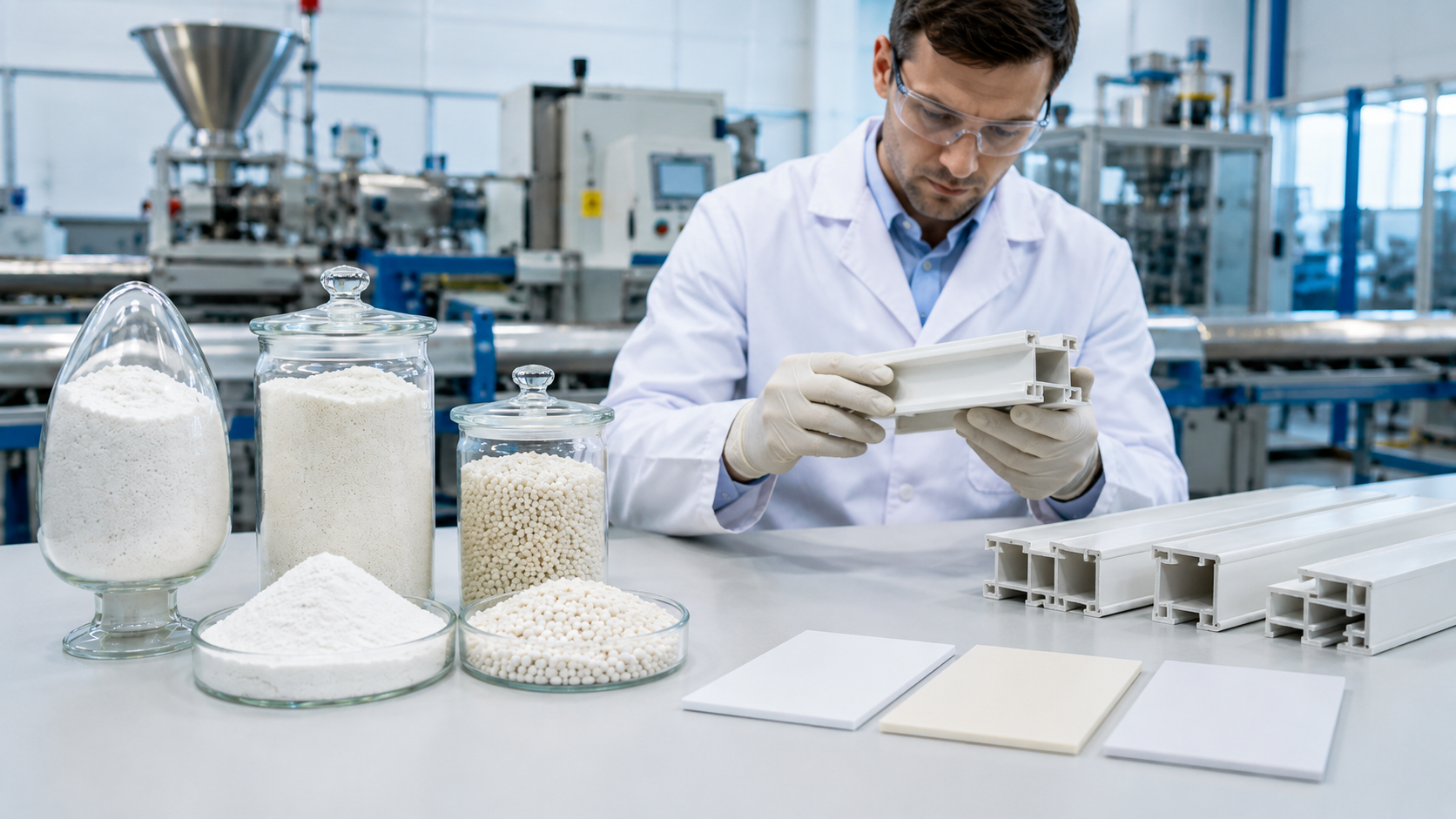
A PVC thermal stabilizer helps solve problems that appear during heating, shearing and continuous production.
Yellowing and Color Deepening
Yellowing is often the first sign of thermal degradation. As PVC degrades, conjugated structures form and color deepens. AIMSEA’s internal transparent PVC testing material also describes a similar color path during heat aging: the sample color can deepen from light color to yellow, reddish brown and black as PVC degradation releases HCl and forms conjugated structures.
A suitable stabilizer improves initial color and delays color change during processing.
Narrow Processing Window
When the processing window is narrow, production becomes unstable. Operators may need to reduce temperature, lower speed or stop frequently for cleaning. A good stabilizer system helps maintain thermal stability and processing tolerance.
Plate-Out and Surface Defects
Plate-out is not always caused by the stabilizer alone. It may come from poor compatibility between stabilizer, lubricant, filler and processing temperature. However, stabilizer formulation has a strong influence on whether the surface stays clean during long runs.
Haze in Transparent PVC
For transparent PVC, heat stabilizer selection is especially sensitive. The stabilizer should support high clarity, low haze, yellowing control and good dispersion. AIMSEA highlights ultra-clear Ca-Zn stabilizer solutions for clear PVC sheet, rigid sheet, shrink film, transparent film, white film, hose and packaging materials.
How to Choose a Heat Stabilizer for PVC Manufacturers?
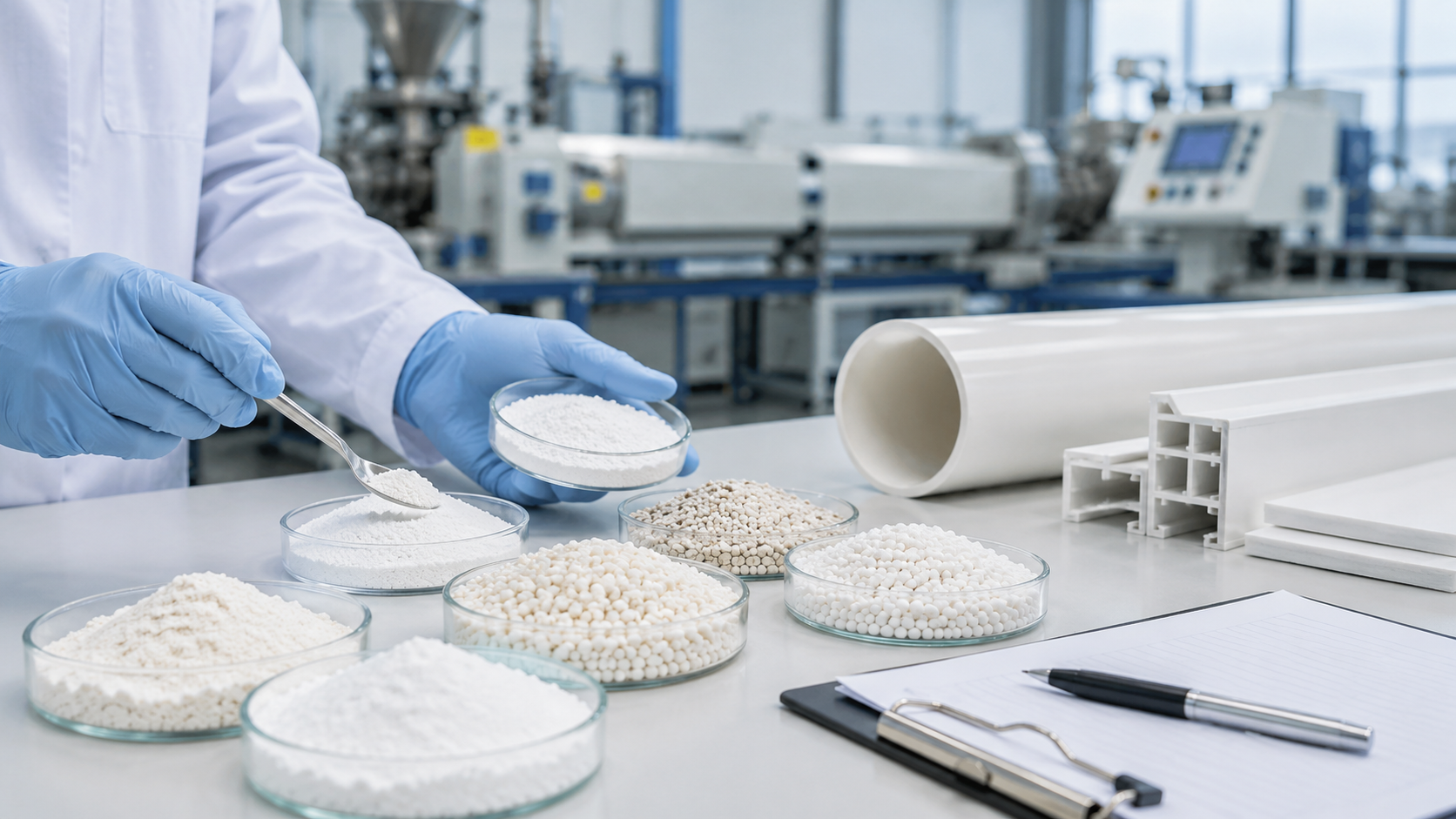
Choosing the right stabilizer should begin with the final product, not the additive name.
A manufacturer should ask four questions first:
1.What product are we making?
2.What problem are we trying to solve?
3.What processing method and temperature are used?
4.What compliance or buyer requirement must be met?
AIMSEA’s product page also follows this application-based logic, offering calcium-zinc stabilizers and customized additive solutions for pipes, fittings, profiles, flooring, cables, transparent products and recycled PVC applications.
Decision Logic for Manufacturers
If Your Main Problem Is... | Focus on This Stabilizer Performance |
Early yellowing | Initial color hold and static heat stability |
Color drift during continuous production | Long-term thermal stability and lubricant balance |
Haze in transparent products | Transparency, dispersion and low volatility |
Plate-out | Compatibility between stabilizer and lubricant system |
Poor extrusion stability | Fusion behavior, torque curve and processing window |
Odor complaints | Low-odor stabilizer system and raw material control |
Export compliance | Lead-free formulation and supporting documents |
This approach makes the article useful for both technical teams and purchasing teams. Engineers need processing logic. Buyers need confidence that the stabilizer can support stable production and target-market requirements.
Calcium Zinc PVC Heat Stabilizer for Lead-Free Production
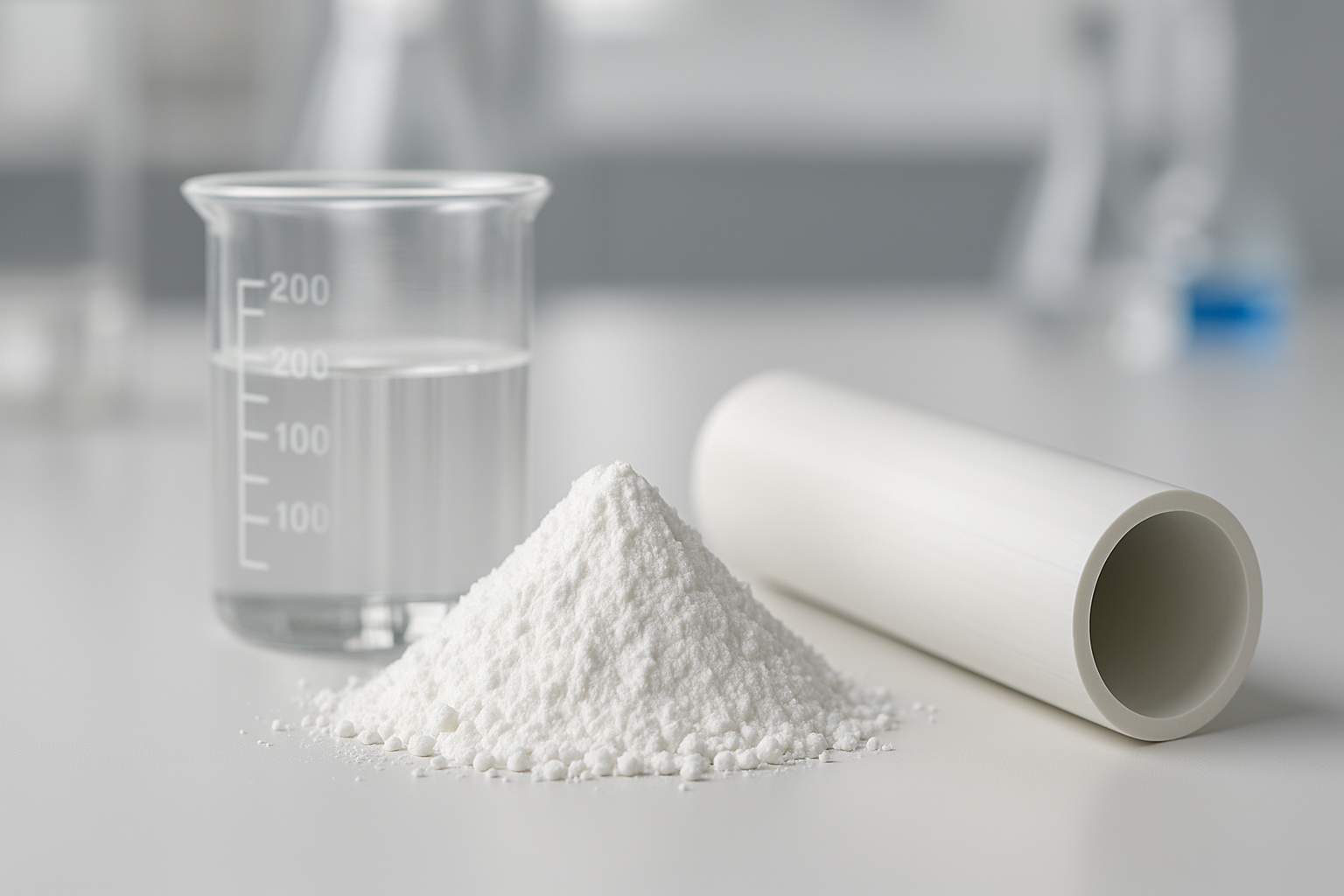
A calcium zinc PVC heat stabilizer is increasingly important for manufacturers moving away from lead-based systems. Calcium-zinc systems are widely used because they support lead-free production, lower odor direction and broader compliance needs.
In the EU, Commission Regulation (EU) 2023/923 amended REACH Annex XVII regarding lead and its compounds in PVC. The regulation states that PVC articles shall not be placed on the market or used if lead concentration is equal to or greater than 0.1% by weight of the PVC material, with the restriction applying from November 29, 2024.
For export-oriented PVC manufacturers, this makes lead-free stabilizer selection more than a technical upgrade. It becomes part of market access, customer trust and supply chain risk control.
Where Ca-Zn Stabilizers Are Commonly Used?
Calcium-zinc stabilizers are commonly used in:
1.PVC pipes and fittings
2.Window and door profiles
3.Wire and cable compounds
4.SPC, LVT and vinyl flooring
5.Flexible PVC products
6.Transparent PVC products
7.Medical-related and daily-use PVC products
8.Recycled PVC formulations
For transparent products, the challenge is higher. The stabilizer must deliver heat stability without sacrificing clarity, gloss or haze control.
Application-Based PVC Heat Stabilizer Selection Table
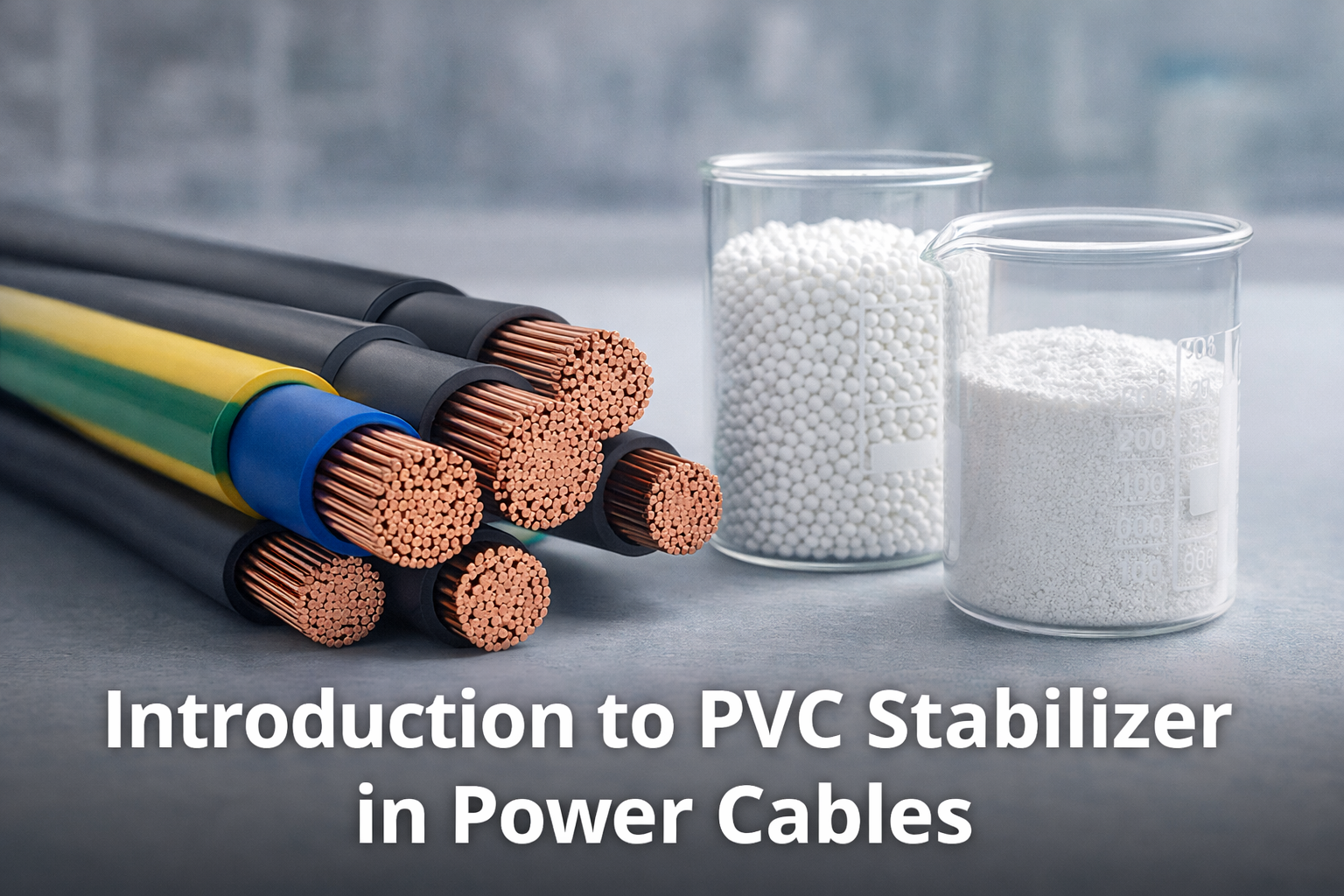
The best heat stabilizer for PVC manufacturers is the one that matches the product and process.
PVC Application | Main Production Concern | Recommended Stabilizer Direction | Key Tests |
Transparent PVC sheet and film | Yellowing, haze, clarity loss | Ultra-clear Ca-Zn, tin, or tin-reduction system | Light transmission, haze, oven aging |
PVC pipes and fittings | Heat stability, pressure performance, smooth extrusion | Ca-Zn or one-pack system | Torque curve, extrusion trial, impact test |
PVC profiles | Whiteness, weatherability, weld strength | Ca-Zn stabilizer | Color hold, weathering, weld strength |
Wire and cable | Thermal aging, insulation, flexibility | Ca-Zn cable stabilizer | Congo red, insulation test, aging test |
Flooring and decorative panels | Color stability, dimensional control, odor | Customized Ca-Zn additive package | Odor test, shrinkage, calendering trial |
PVC foam board | Cell structure, surface smoothness, density control | Application-specific one-pack stabilizer | Density, foam cell, extrusion stability |
Recycled PVC | Odor, compatibility, color fluctuation | Customized stabilizer plus deodorizer if needed | Odor test, color control, continuous run |
Why Application-Based Selection Works Better?
A stabilizer that performs well in a pipe extrusion line may not deliver the same result in calendered transparent film. The heat history, shear condition, surface requirement and final standard are different. Application-based selection reduces trial-and-error and gives suppliers a clearer target.
Testing Checklist Before Bulk Production
Before switching stabilizers or placing a bulk order, manufacturers should run a structured trial.
Basic Laboratory Tests
① Static heat stability test
② Dynamic heat stability test
③ Torque rheometer test
④ Color comparison
⑤ Haze and light transmission test for transparent PVC
⑥ Odor evaluation
⑦ Compatibility check with lubricants and fillers
Production Trial Checks
① Feeding stability
② Fusion behavior
③ Torque and current fluctuation
④ Die pressure
⑤ Surface gloss
⑥ Plate-out after continuous running
⑦ Output speed
⑧ Scrap rate
⑨ Product dimensions
⑩ Long-run color stability
Supplier Information to Provide
To receive a useful recommendation, manufacturers should provide:
① Product type
② Rigid or flexible formulation
③ PVC resin grade and K value
④ Filler type and loading
⑤ Current stabilizer type and dosage
⑥ Processing method
⑦ Processing temperature range
⑧ Current production issue
⑨ Target market
⑩ Required compliance documents
? Desired improvement, such as clarity, odor, cost, stability or output
A good supplier should provide a testable formulation direction, not just a product code.
FAQs About PVC Heat Stabilizers
What is PVC heat stabilizer used for?
It is used to protect PVC from thermal degradation during processing and service life. It helps reduce yellowing, improve color retention, stabilize production and protect final product performance.
Why does PVC release HCl when heated?
PVC can undergo dehydrochlorination when exposed to heat. This releases hydrogen chloride and forms conjugated double bonds, which contribute to discoloration and further degradation.
What is the best heat stabilizer for PVC?
There is no single best stabilizer for every PVC product. Calcium-zinc stabilizers are suitable for many lead-free applications. Tin stabilizers are often used for high-clarity transparent PVC. One-pack systems are useful when manufacturers need simplified formulation and stable production.
Is calcium-zinc stabilizer suitable for transparent PVC?
Yes, but the grade must be designed for transparency. Clear PVC requires low haze, high light transmission, good dispersion, color stability and low odor. A general Ca-Zn stabilizer may not be suitable without testing.
Can heat stabilizers reduce plate-out?
They can help, but plate-out usually depends on the full formulation. Stabilizer type, lubricant balance, filler, processing temperature and equipment condition should all be checked.
What documents should export PVC manufacturers request?
Manufacturers should request SDS, COA, heavy metal test support, RoHS or REACH-related documentation when applicable, and product-specific trial data.
Conclusion
A PVC heat stabilizer is not only used to prevent PVC from burning. It protects the entire manufacturing process.
It helps control HCl-related degradation, reduce yellowing, widen the processing window, improve surface quality, support stable production and protect final product performance. For manufacturers, the right stabilizer should be selected by application, processing method, visible quality target and compliance requirement.
For lead-free production, calcium-zinc stabilizers are becoming a practical direction for many PVC manufacturers. For transparent PVC, the stabilizer must go further: it must support heat stability, clarity, haze control and low odor at the same time. For factories seeking simpler formulation management, one-pack systems can reduce batching complexity and improve production consistency.
The most reliable selection method is simple: define the product, identify the production problem, share the real formulation and run a structured sample trial before bulk use.
References
1.PVC thermal degradation involves dehydrochlorination, HCl release and conjugated double bond formation, which are closely related to discoloration.
2.SpecialChem explains that PVC heat stabilizer selection is linked with stabilizer type, viscosity behavior and lubrication balance, especially in rigid PVC processing.
3.AIMSEA provides lead-free calcium-zinc PVC stabilizers and customized heat stabilizer solutions for pipes, fittings, profiles, flooring, cables, transparent PVC products and recycled PVC applications.
4.EU Regulation 2023/923 amended REACH Annex XVII regarding lead and its compounds in PVC, with restrictions applying from November 29, 2024.
5.AIMSEA internal CZ-186 organotin companion testing material was used as background for transparent PVC heat aging, HCl release and tin-reduction discussion.
Table of Contents
Copyright © Shenzhen Zhihai Industrial Co., LTD.
Digital Marketing : CTMON


×
CONTACT US
We use cookies to allow our website to function properly, personalize content and advertising, provide social media functionality, and analyze traffic. We also share information about your use of our website with social media, advertising, and analytics partners.
Agree
Reject

loading...